
After the neon-drenched, high-octane energy of Cyberpunk Chongqing, I often find that my soul craves something profoundly different. In China, when the weight of city lights and 996 work schedules feels overwhelming, we collectively look toward one sanctuary: Yúnnán (云南). Its name translates beautifully to “South of the Clouds,” and it remains the undisputed heart of the màn shēnghuó (慢生活)—the “slow life.”
In 2026, I have found that Yúnnán has evolved from a mere tourist destination into a spiritual refuge for digital nomads, weary artists, and anyone seeking to reconnect with a slower rhythm of existence. Here, time isn’t tallied by the frantic ticking of a digital clock, but by the gradual migration of sunlight across a weathered, ancient courtyard. In this guide, I’ll share my personal journey through the mist-covered paths of Dàlǐ, Lìjiāng, and Shāngé-lǐlā.
1. Dàlǐ: The Sanctuary of “Doing Nothing”
If you were to ask a local in Dàlǐ (大理) what their specific plans are for the afternoon, the most likely answer—delivered with a contented smile—is shàitàyáng (晒太阳), or simply “basking in the sun.” Nestled precariously yet perfectly between the jagged, towering peaks of the Cāngshān Mountains and the vast, mirror-like expanse of Ěrhǎi Lake, Dàlǐ is the kind of place where the concept of “productivity” feels like a distant, irrelevant memory.
- The Atmosphere: The town is defined by its “Renmin Road” culture. I love wandering here to see travelers from every corner of the globe setting up impromptu stalls, strumming acoustic guitars, and sharing stories over hand-woven trinkets.
- My Favorite Ritual: Nothing beats renting an electric scooter to circle the perimeter of Ěrhǎi Lake. I recommend stopping at a quiet, hidden café in Xǐzhōu (喜洲). Do not leave without trying the Xǐzhōu bǎ bǎ (喜洲粑粑). The scent of charred flour and scallions wafting from the clay ovens is enough to stop me in my tracks every single time.
- Pro Tip: Many young creatives relocate here to embrace the philosophy of tǎngpíng (躺平), or “lying flat.” It isn’t just laziness; it’s a deliberate, quiet rebellion against the frantic pace of modern life.
2. Lìjiāng: A Labyrinth of Stone and Water
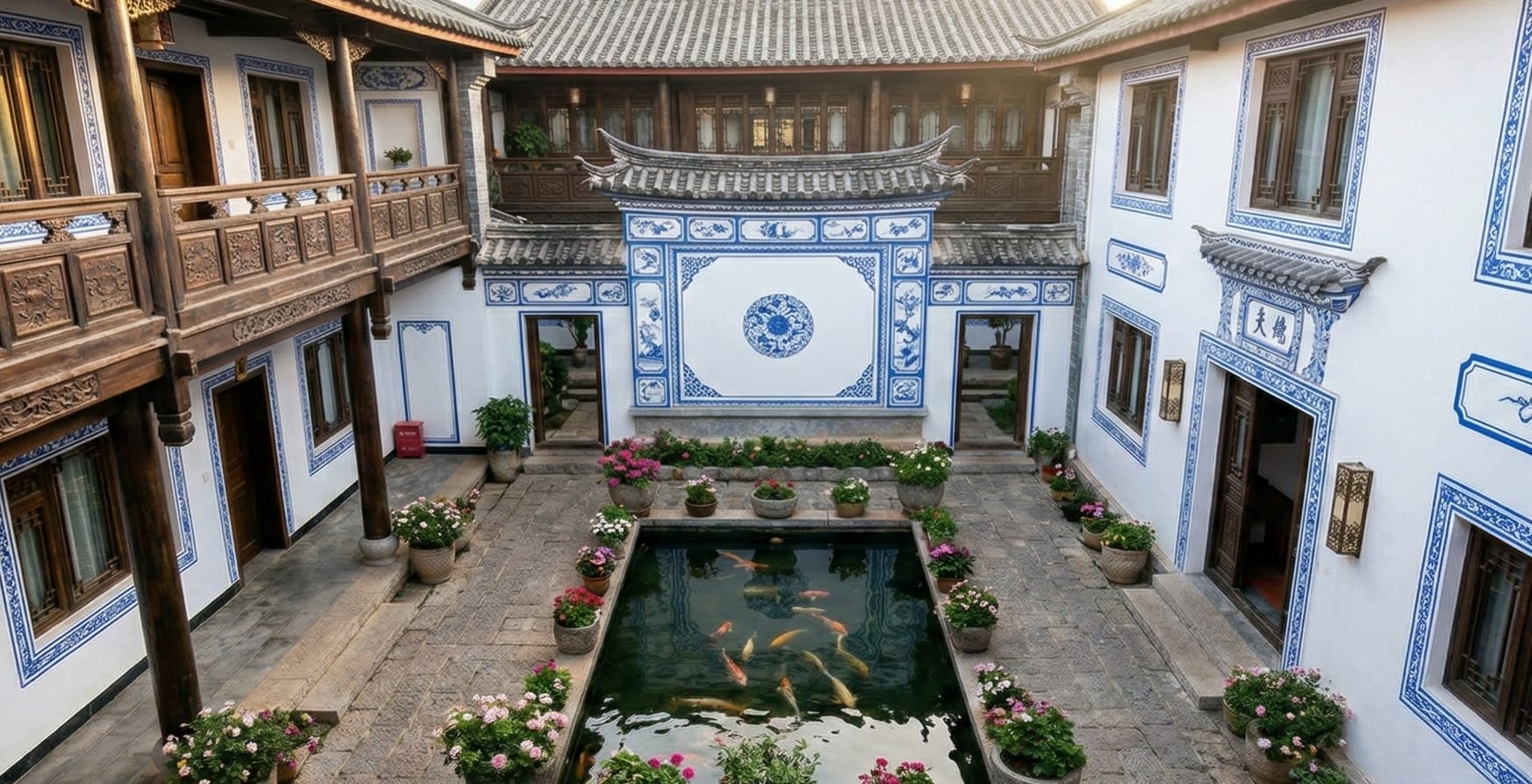
A few hours north of Dàlǐ, the landscape shifts into the storied streets of Lìjiāng (丽江). While Dàlǐ is defined by the expanse of the lake, Lìjiāng is defined by its Gǔchéng (古城)—the Ancient Town. It is a UNESCO World Heritage site where I often lose myself in a maze of cobblestones. The architecture is a marvel of Naxi culture, with a spiderweb of canals that run alongside every shop and home, their constant murmuring providing the town’s soundtrack.
| Destination | Highlight | Local Flavor |
|---|---|---|
| Dàlǐ (大理) | Lakeside serenity | Three-Course Tea (sāndào chá) |
| Lìjiāng (丽江) | Ancient canals | Black Goat Hot Pot (hēiyáng huǒguō) |
| Shāngé-lǐlā (香格里拉) | Tibetan highlands | Yak Butter Tea (sūyóu chá) |
I find the true magic of Lìjiāng reveals itself only at dawn. Before the tour groups flood the narrow alleys, the air is crisp, and you can hear the soft clip-clop of horse hooves echoing off the stone. Gazing upward, the snow-dusted peak of Yùlóng Xuěshān (玉龙雪山)—Jade Dragon Snow Mountain—looms over the horizon, a silent, majestic sentinel that humbles anyone who dares to look its way.
3. Shāngé-lǐlā: Where Earth Touches Heaven
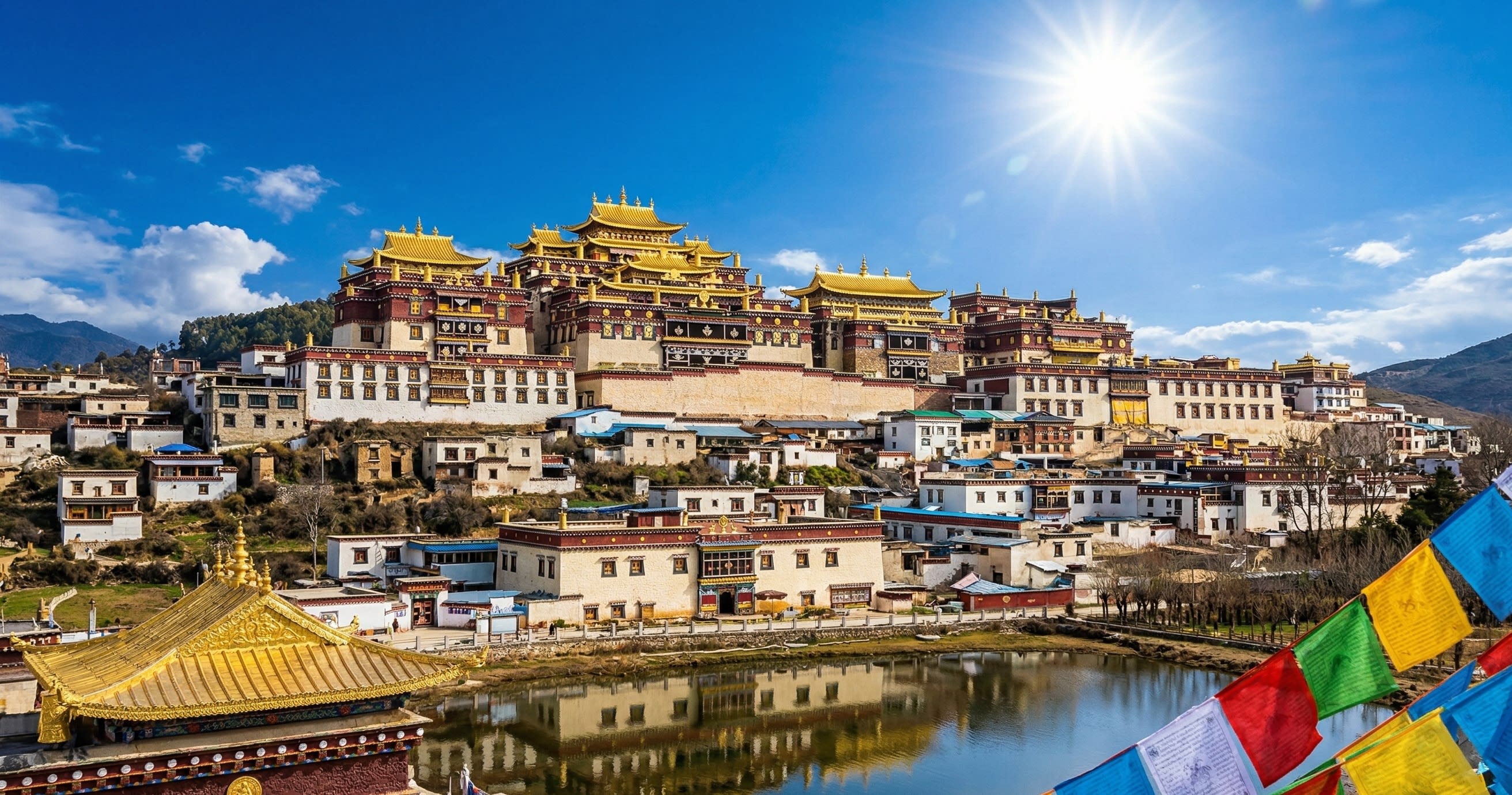
As I climbed higher into the mountain passes, the air grew noticeably thinner and cooler. Arriving in Shāngé-lǐlā (香格里拉) feels like crossing a threshold into another world. The lush greenery of the south gives way to the stark, breathtaking beauty of the high Tibetan plateau. Here, the deep blue of the sky is so intense it almost hurts to look at, and the fragrance of mountain juniper incense hangs heavy in the air.
The Sōngzhànlín (松赞林) Monastery is a place I visit whenever I need to recalibrate my perspective. Known as the “Little Potala Palace,” its golden roofs catch the first light of day with an intensity that is spiritual in its own right. Walking through those quiet, shadowed halls, I find the perfect conditions for fàngkōng (放空)—the intentional act of emptying one’s mind of all chatter.
4. The Wild Tastes of Yúnnán
I have always felt that Yúnnán cuisine is the most exciting in China. Because of its vast array of ethnic minority cultures, the ingredients often feel “wilder” and more untamed than in the bustling east.
- Wild Mushrooms (yěshēng jùn 野生菌): During the rainy season, local markets are a riot of colors and bizarre shapes. I always look for porcini or chanterelles, but I always defer to local experts, as some varieties can be quite potent if not prepared correctly.
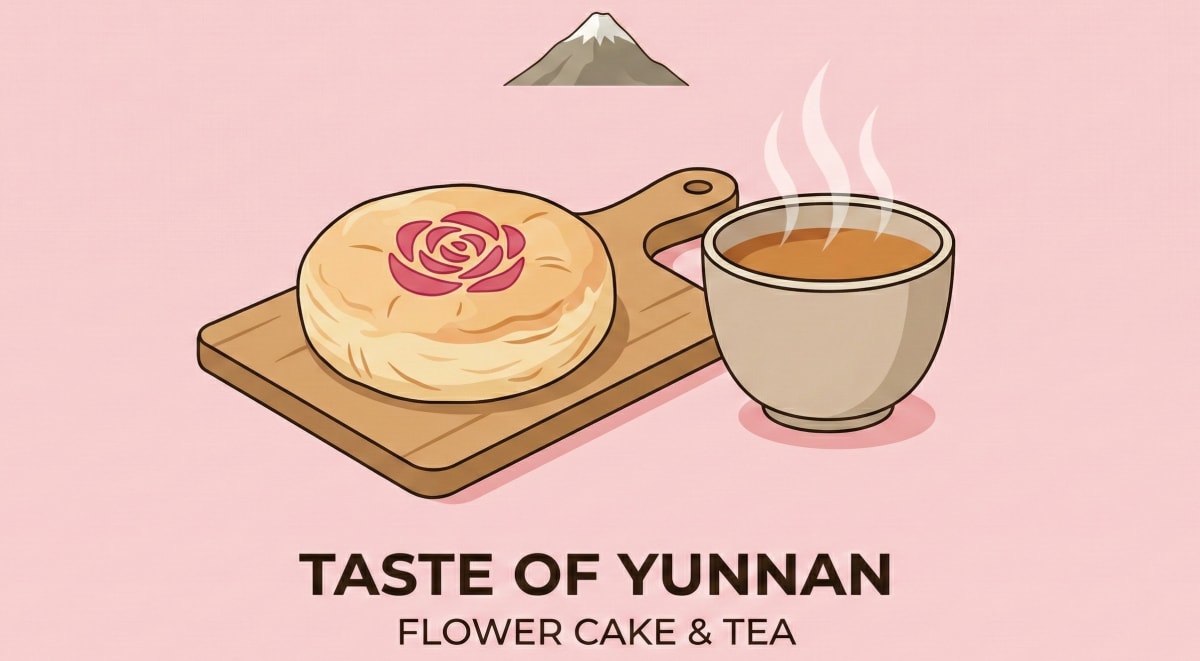
- Flower Cakes (xiānhuā bǐng 鲜花饼): These are my go-to gift. The delicate, flaky shortbread gives way to a sweet, floral center of rose petals. If you have a decent baking sheet at home, these are a fun challenge to recreate.
- The Dairy Tradition: Unlike much of China, Yúnnán has a fascinating history with cheese. I am obsessed with rǔshàn (乳扇), a type of fried goat cheese fan that is traditionally served with a smear of sweet rose jam.
5. Survival Tips for the Slow Life
To truly enjoy Yúnnán in 2026, you must abandon your “city” speed.
- Respect the Altitude: Shāngé-lǐlā sits at 3,300 meters. I learned the hard way that altitude sickness is not a myth. Stay hydrated, avoid heavy meals the first night, and resist the urge to power-walk.
- Sun Protection: Do not underestimate the sun. The higher altitude means more intense UV rays. Even on a hazy day, I always apply heavy-duty sunscreen before heading out.
- Choose the Right Stay: Skip the chain hotels. Look for a mínshù (民宿)—a boutique guesthouse. Often, these are century-old homes where the host will eventually invite you for a long, meditative gōngfu chá (功夫茶) tea session, which is where the best travel stories are told.
Final Thoughts
Yúnnán is not merely a geographic point on a map; it is a profound state of mind. It serves as a gentle, persistent reminder that our lives do not always have to be lived at maximum velocity. Whether I am watching the twilight turn the surface of Ěrhǎi Lake into a bruised purple, or listening to the low, rhythmic chanting of monks in Shāngé-lǐlā, this region always teaches me that the most precious thing any of us can curate is our own time.
Slow down, breathe in that thin, cool mountain air, and let the clouds of Yúnnán carry your burdens away for a while.
Inspired by the slow life? Continue your journey with my deeper look into The Art of Chinese Tea or explore the structural secrets of Ancient Shanxi Architecture.
Disclaimer: As an Amazon Associate, ChinaCurator earns from qualifying purchases.