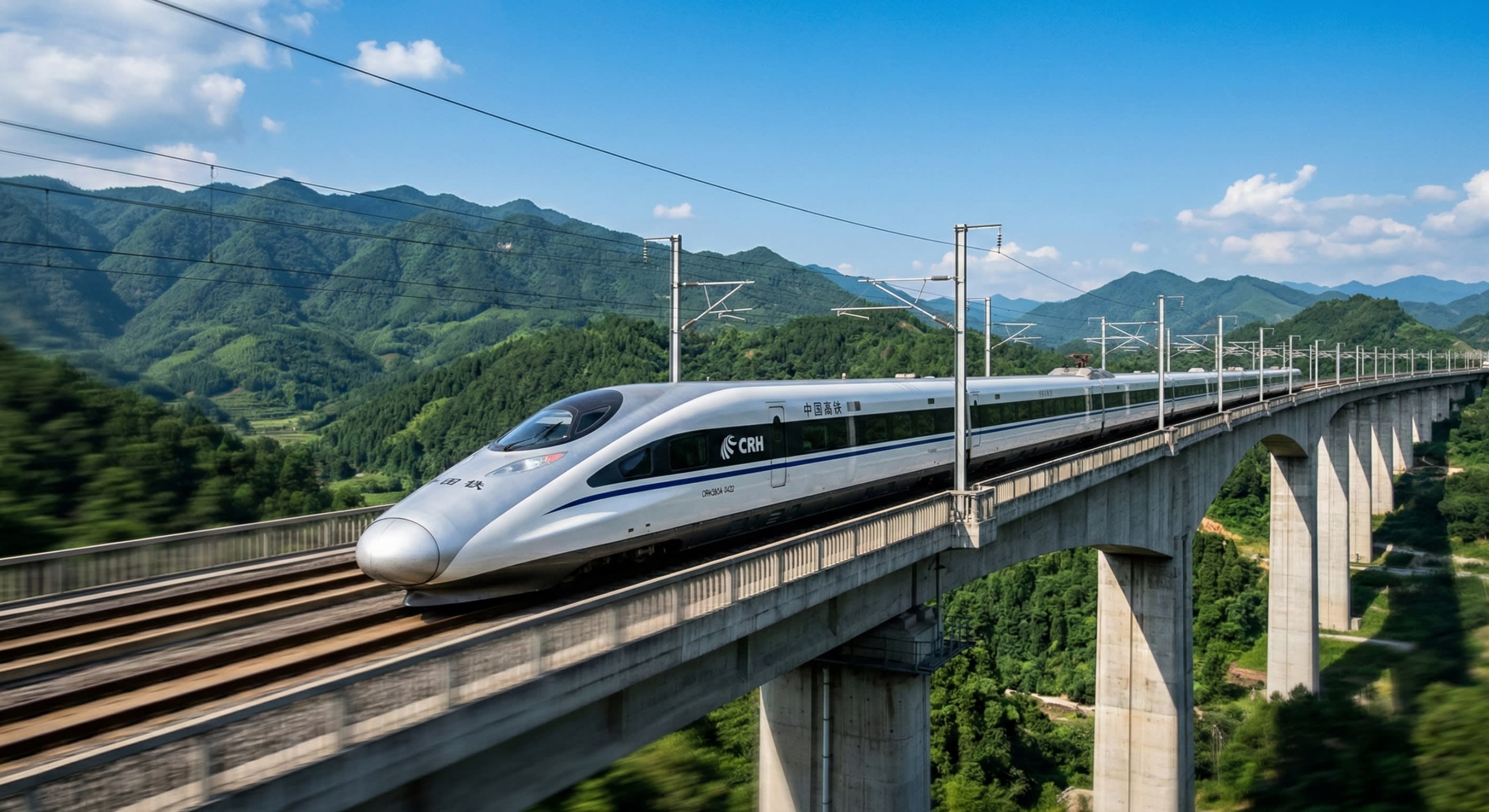
Managing a multi-floor office renovation—especially when you are wrestling with the structural quirks of a building that hasn’t seen a proper update since 2005—demands a level of scheduling precision that would make a Swiss watchmaker blush. In China, this relentless, clockwork precision is embodied by the high-speed rail network, known to locals as gāotiě (高铁).
While I personally love the freedom of hitting the open road in a 2024 Long Range All-Wheel Drive electric vehicle to hunt down hidden, misty mountain villages, there is an unparalleled, meditative quality to the gāotiě. There is no traffic, no road rage, and no fatigue. You simply glide across the landscape at 350 km/h (217 mph), watching the world blur into a streak of emerald green and terracotta. For any journey under five hours, these trains have effectively rendered domestic flights obsolete.
However, for the uninitiated traveler in 2026, the prospect of booking these tickets can feel like attempting to solve a cryptographic puzzle. The stations are sprawling, the terminology is specialized, and the digital ecosystem is entirely self-contained. Don’t worry; I’ve navigated this system countless times, and I’m going to show you how to master the rails like a local.
1. The Only App You Need: 12306
If you’ve spent any time optimizing web code for platforms like ChinaCurator, you understand that a seamless user experience is the bedrock of any successful digital journey. For years, international travelers relied on third-party aggregators to handle their bookings. While convenient, those platforms often come with hidden service fees and can occasionally stutter during the intense traffic of peak travel seasons.
The true gatekeeper—and your best friend—is the official government app: 12306 (pronounced yāo èr sān líng liù).
China Railway has invested heavily in the English interface of the 12306 app. You can download it directly from your global app store, register using your international phone number, and tether it to your global payment methods via Alipay or WeChat Pay. It is clean, functional, and incredibly powerful once you know the ropes.
Identity Verification (Shímíng Rènzhèng 实名认证)
Before you can claim a seat, you must pass the identity verification process. In China, your ticket is inextricably linked to your passport.
- Within the 12306 app, head to your profile settings and input your passport details with surgical precision.
- My Pro-Tip: Enter your name exactly as it appears in the MRZ (Machine Readable Zone) at the bottom of your passport photo page. If you have a middle name, it belongs in the “Given Name” field. If the system flags you, don’t panic; you’ll need to upload a clear scan of your passport page for manual review, which usually clears within 24 hours. Do this well before your departure—there is nothing worse than being stuck in a hotel lobby frantically trying to verify your identity while your dream train sells out!
2. Timing the Market: The 15-Day Rule
Unlike airlines, which often release tickets months in advance, China Railway operates on a strict 15-day pre-sale window. Tickets for any given date are released exactly 15 days prior.
On an average Tuesday, you might get away with booking a day or two in advance. However, if you are traveling during the Spring Festival or the October Golden Week, the competition is fierce. This frantic, high-speed digital scramble is referred to as qiǎngpiào (抢票), or “ticket snatching.”
The “Waitlist” Lifesaver (Hòubǔ 候补)
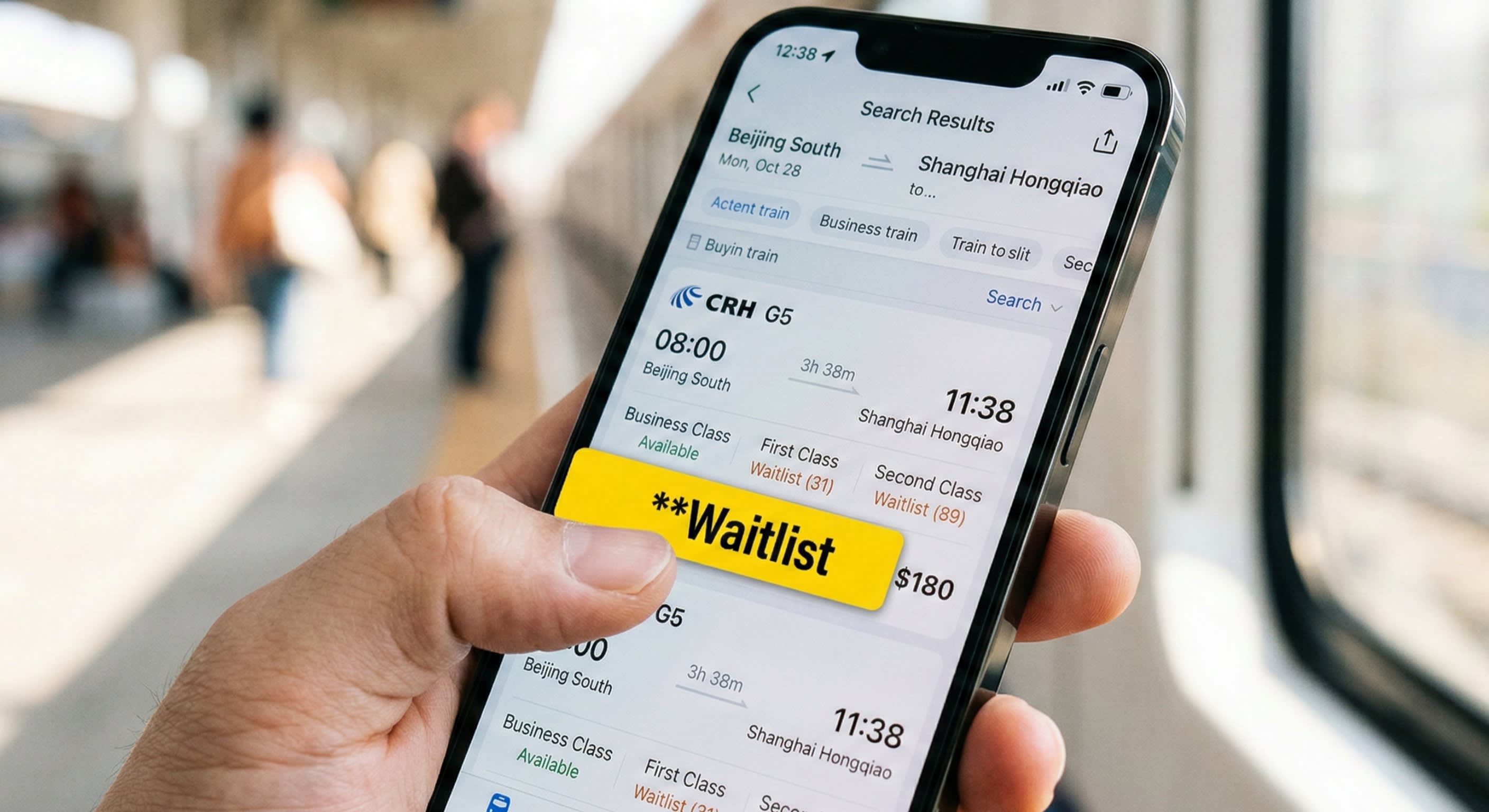
If you click on your preferred train and see “Sold Out,” don’t close the app just yet. The 12306 app features a brilliant system called hòubǔ (候补), or waitlist.
- When you submit a waitlist order, you pay for the ticket upfront.
- The system then monitors for cancellations or added train cars. If a seat opens up, you are automatically assigned to it.
- From my personal experience, this system has an incredibly high success rate—I’d wager well over 80%. If the system fails to secure a seat by your departure time, it will automatically process a full, painless refund to your account.
3. Decoding the Seat Classes
High-speed trains in China (identifiable by the “G” or “D” prefix on the schedule) offer a level of comfort that puts many premium economy airline seats to shame.
| Seat Class | Chinese & Pinyin | The Experience |
|---|---|---|
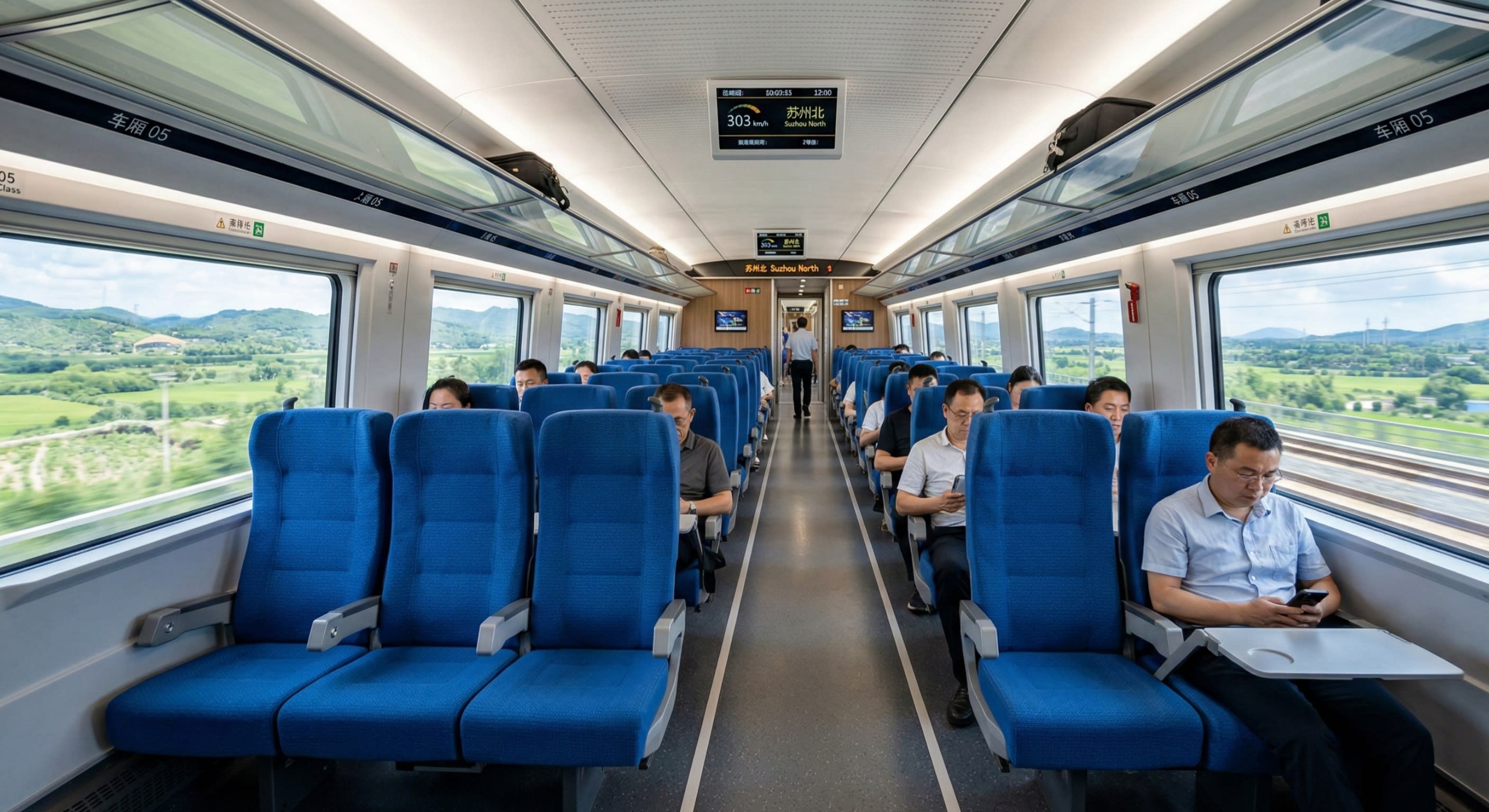
| Second Class | 二等座 (èrděngzuò) | Arranged 3-2. Excellent value, ample legroom, and reliable power outlets. It is the gold standard for the vast majority of local travelers. |
| First Class | 一等座 (yīděngzuò) | Arranged 2-2. Wider, plush seating with dedicated footrests and a quieter cabin environment—perfect for catching up on emails or reading a book. |
| Business Class | 商务座 (shāngwùzuò) | True luxury. Fully lie-flat pods, gourmet hot meals, plush slippers, and private lounge access at the station. |
4. Navigating the Mega-Stations
Chinese train stations—like Shanghai Hongqiao or Guangzhou South—are architectural monoliths that rival the busiest international airports. My advice? Arrive at least 45 minutes to an hour before your scheduled departure time to avoid the anxiety of a last-minute sprint.
Step 1: The Security Check (Ānjiǎn 安检)
Upon entering the terminal, you’ll proceed through security. Place your bags on the scanner and pass through the detector. Remember, common items like pressurized aerosol spray cans or oversized utility knives are strictly prohibited—don’t let your favorite travel multi-tool get confiscated here!
Step 2: The Gate Check (Jiǎnpiàokǒu 检票口)
Monitor the massive digital departure boards. Your train number will correspond to a specific gate, known as the jiǎnpiàokǒu (检票口). You will often see an “A” and “B” designation for the same gate (e.g., 12A and 12B); these lead to different ends of the same platform, so check your app to see which is closest to your carriage number.
Step 3: Paperless Boarding
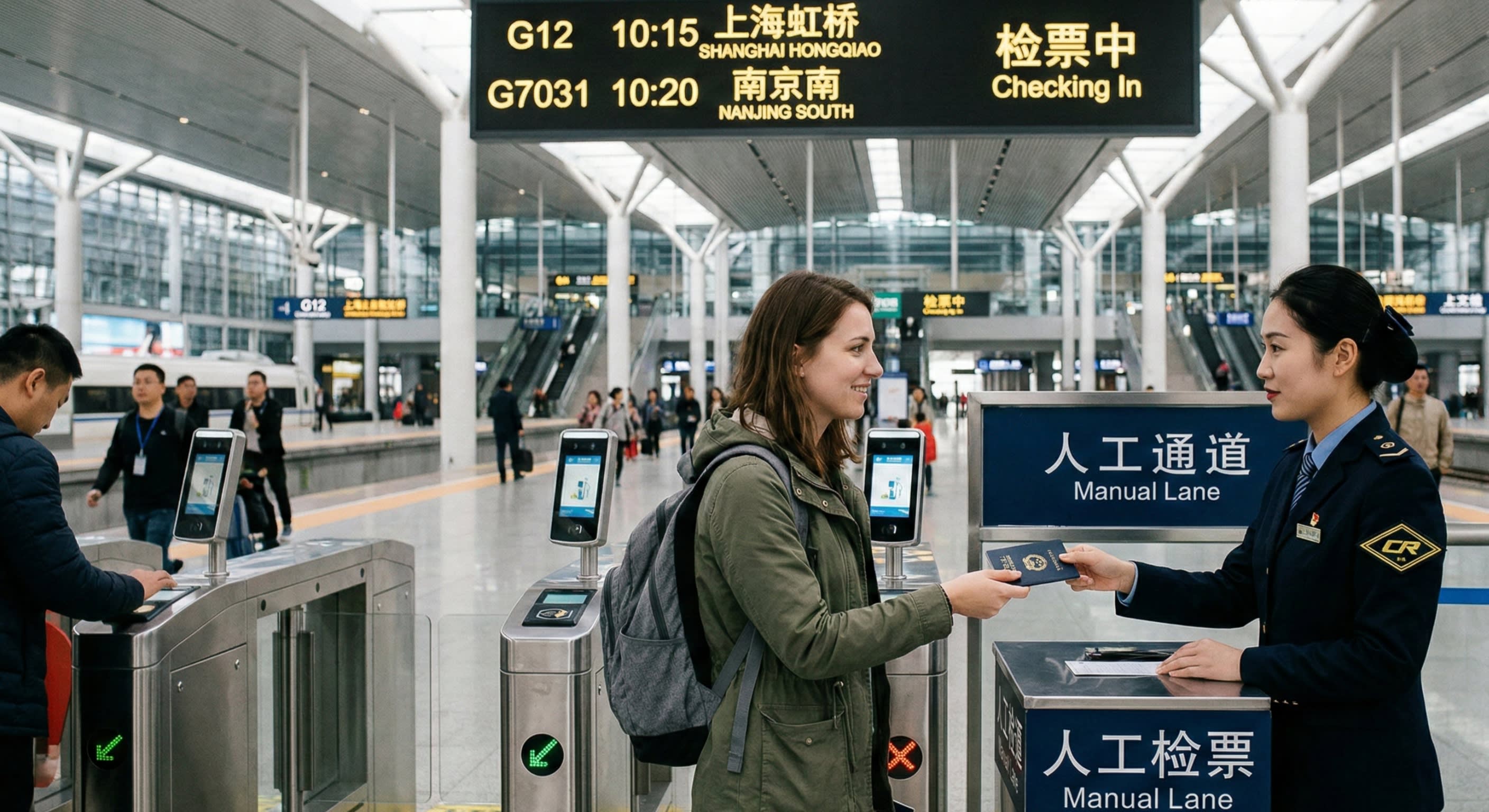
We live in a paperless age. When the boarding gates open, roughly 15 minutes before the train departs, you simply approach the automated turnstiles. While locals use their national ID cards, you will head to the manual lane staffed by an attendant. Present your physical passport, they’ll scan it against the system, and you’re in. It’s remarkably efficient.
5. Life on Board
Once you settle into your seat (chéngxiāng 车厢), you’ll find that the ride is so tranquil you could easily balance a coin on the tray table, even as you rocket through the countryside.
When hunger strikes, you have options. Attendants frequently navigate the aisles with carts of snacks and coffee. Even better, use the 12306 app to order food delivery from restaurants at upcoming stations. Need a hot meal? Order some dumplings or a burger 45 minutes ahead, and a courier will hand the package to the train staff, who will deliver it right to your seat. It is the ultimate travel hack for long-distance trips.
Final Thoughts
Once you stop viewing the 12306 app and the gāotiě network as hurdles and start seeing them as the keys to the kingdom, your travel experience in China will fundamentally shift. It removes the stress of security lines and the sheer exhaustion of navigating highways, delivering you rested and ready to explore your next destination.
Whether you are embarking on a mission to see the greatest 5A scenic spots or simply moving between megacities, the rails are your best bet.
Got your tickets booked? Make sure you know how to talk to your local driver once you arrive with our guide to Talking to Your Didi Driver or check out our Ultimate Street Food Map to plan your first authentic meal upon arrival.