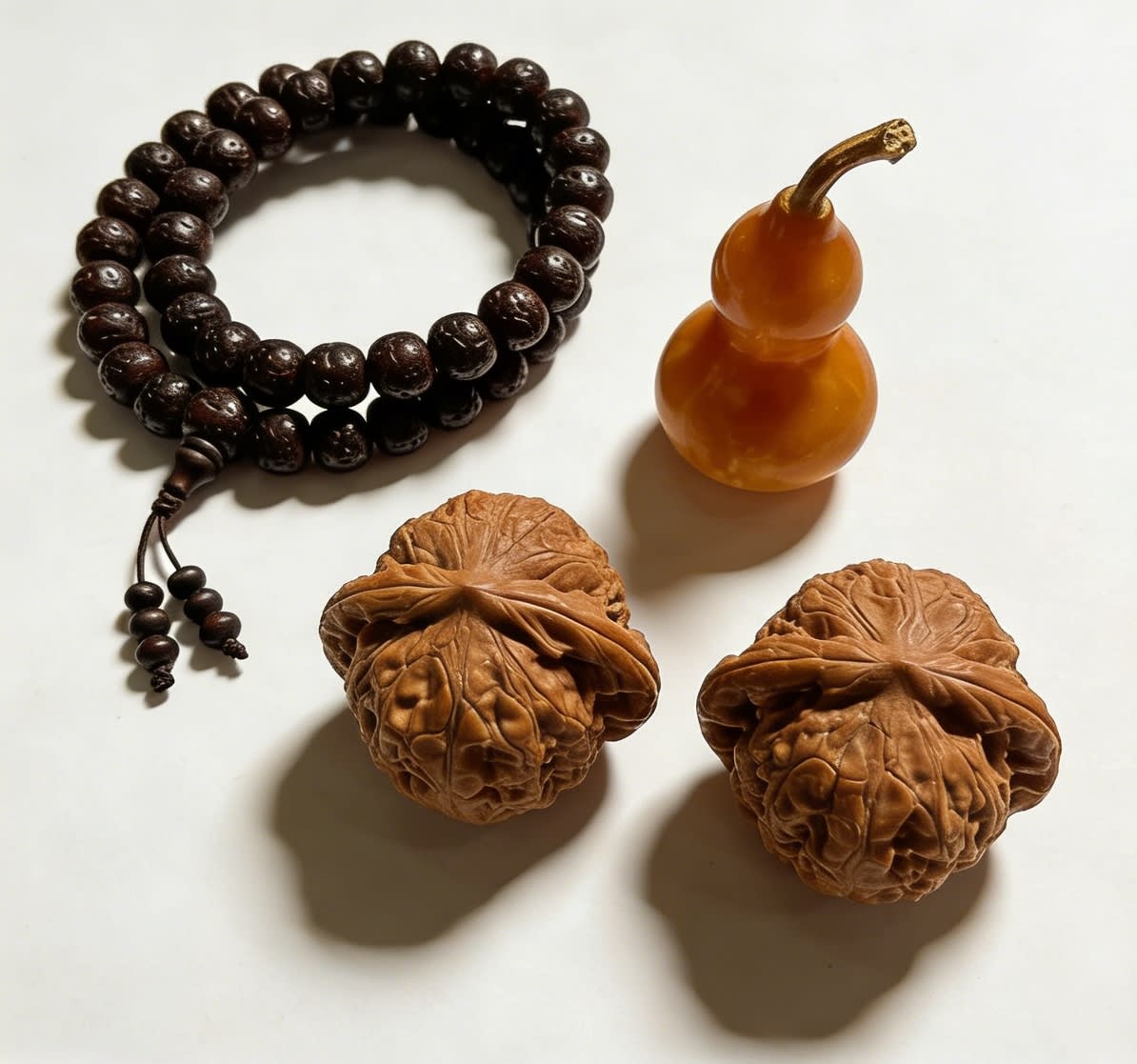
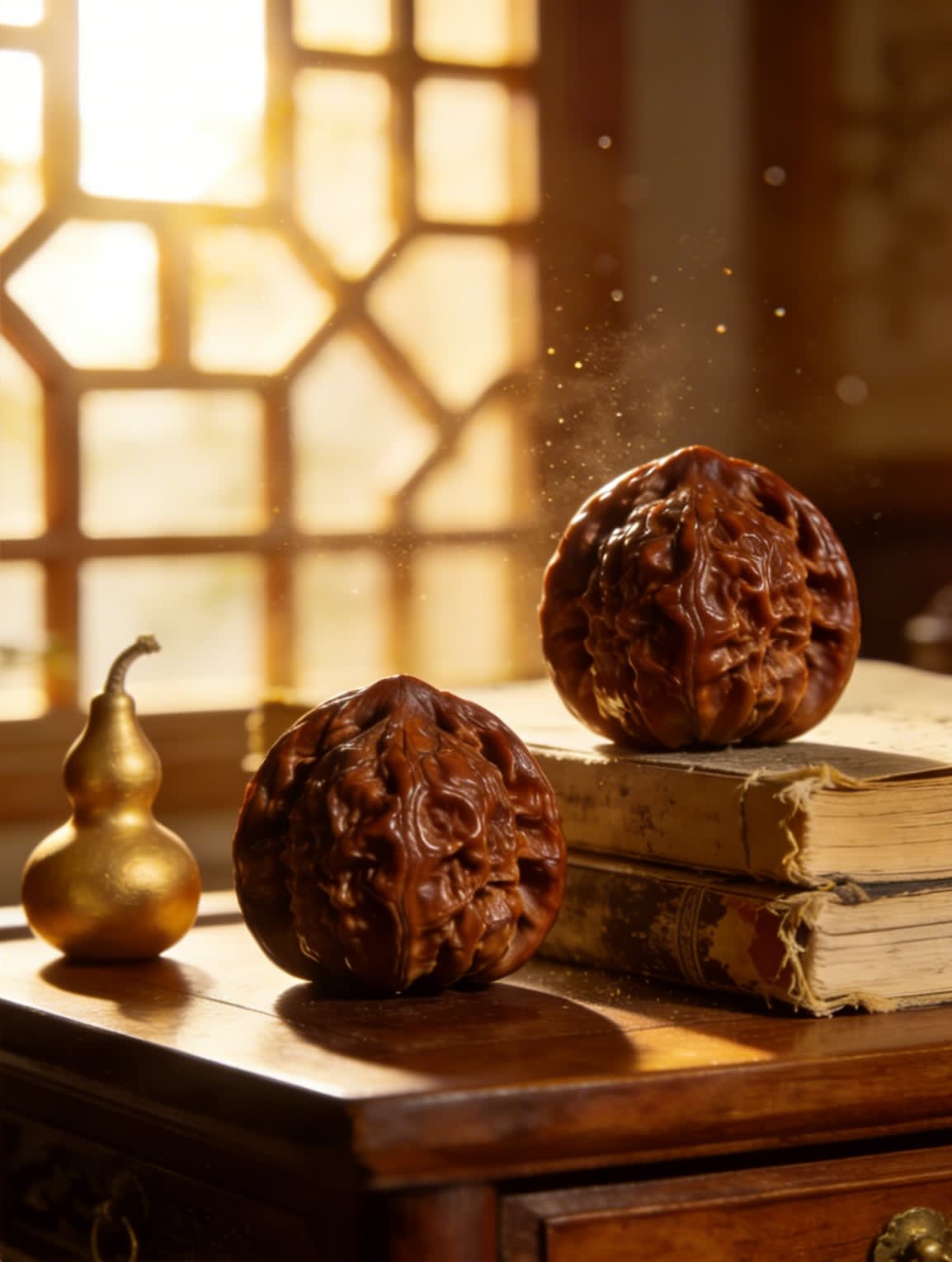
If you have spent any time wandering through the quiet, leafy corners of a Beijing park or tucked away in a bustling Chengdu teahouse, you have likely encountered a scene that feels completely suspended in time. It is a soft, rhythmic clicking sound—the intentional clack of two ancient walnuts revolving perfectly in a palm—or perhaps the meditative, circular motion of an elder polishing a small, amber-hued gourd with a piece of silk.
This, my friend, is not mere fidgeting. It is Wenwan (文玩, wénwán).
Directly translated as “literati playthings,” Wenwan represents a profound category of collectibles that Chinese scholars and artists have cherished for centuries. Unlike Western artifacts often locked behind velvet ropes and clinical glass vitrines, Wenwan is a tactile, breathing tradition. These are objects meant to be held, sensed, and slowly—almost imperceptibly—transformed by the very hands that own them. When I first encountered a collector in a local market, I was struck by the sheer intensity of his focus; he treated his small, stone-like object with the same reverence one might show a rare painting.
1. The Living Record: The Spirit of “Play”
At its core, Wenwan is an intimate, long-term dialogue between the object and the person. The heartbeat of this hobby is Panwan (盘玩, pánwán), a term that describes the intentional, rhythmic process of rubbing or “playing” with an object. It is a slow, methodical practice that asks for nothing but your undivided attention.
As you handle a piece—whether it is a rough-hewn seed or a smooth, cooling stone—your skin’s natural oils and the constant, gentle friction interact with the material. Over months, sometimes years, the surface undergoes a miraculous alchemy: it develops Baojiang (包浆, bāojiāng), a deep, translucent, glass-like patina. I remember holding my first walnut for the first time; the weight felt significant, grounding me in a way I hadn’t expected. A well-“panned” object is essentially a visual diary of your patience. It glows with a unique, inner luster that cannot be faked, bought, or rushed, acting as a physical record of the time and energy you have invested.
2. The Four Pillars of Wenwan
To begin your journey into this world, it helps to understand the four primary “tribes” of Wenwan. Each requires a different temperament and offers a distinct sensory reward.
| Category | Common Items | The Desired "Baojiang" |
|---|---|---|
| Seeds & Nuts | Walnuts (Hetao), Bodhi Seeds | A deep "ox-blood" red color and glass-like shine. |
| Wood | Sandalwood, Rosewood bracelets | A silky, satin finish and a subtle natural fragrance. |
| Nature | Natural Gourds (Hulu) | A honey-like, golden-amber glow. |
| Stone & Jade | Hetian Jade, Shoushan Stone | Increased "warmth" and a signature oily texture (Runness). |
3. The Art of the Gourd (Hulu)
There is something uniquely humble and deeply poetic about the gourd (葫芦, húlu). In Chinese tradition, it is a homophone for fúlù (福禄), which carries the beautiful resonance of “fortune and wealth.”
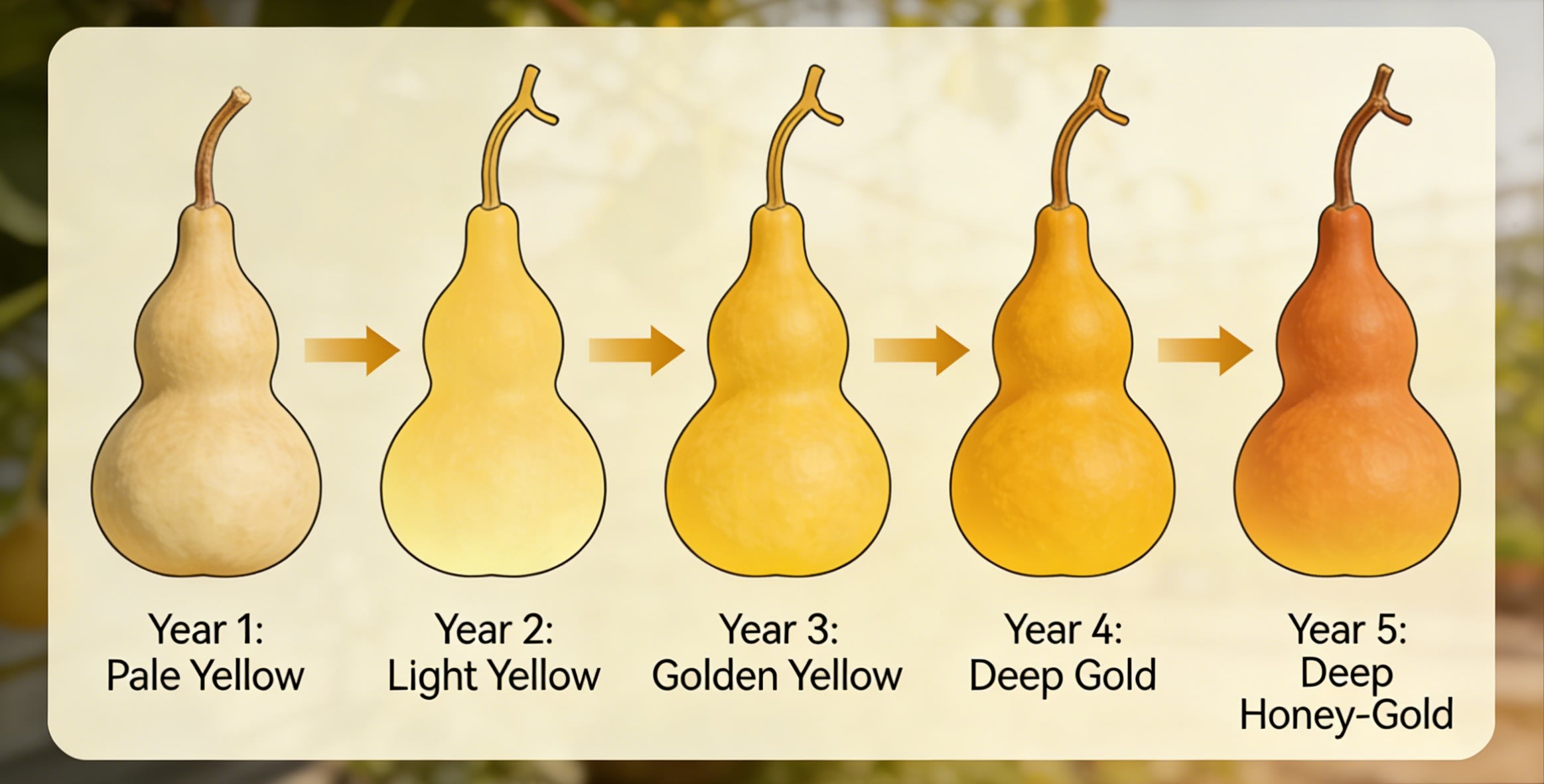
For a true enthusiast, a dried, raw gourd is not an end product; it is a living canvas. When you first hold it, it feels light, dry, and almost fragile. The goal is to transform this pale, porous shell into “living gold.” Watching the slow shift in color as the seasons pass—from a sandy beige to a rich, deep honey—provides a sense of connection to nature that is often missing from our modern, digital lives. I often keep a small gourd carving on my desk just to remind myself of this organic beauty.
4. The Curator’s Guide to Maintenance
Maintaining these items is an art form of its own, and I have learned this the hard way after accidentally damaging a beautiful set of beads. Beginners often panic at the first sign of a blemish, but learning how to treat your collection is where the real expertise is born.
- The Rule of Dryness: Humidity is a fickle friend. If you live in a damp climate, you must store your items in a controlled environment to prevent mold. Never touch your Wenwan with sweaty palms; excessive moisture is the fastest way to ruin a budding patina.
- The “Spot” Check: A small black spot on a gourd? Don’t toss it. Gently using high-grit sandpaper can often lift these impurities. It teaches you to be attentive and corrective rather than wasteful.
- The Patience Test: Avoid all oils, waxes, or chemical polishes. They provide an artificial “short-cut” shine that will eventually turn black and sticky. True beauty in Wenwan is only earned through clean, consistent, and patient touch.
If you are just getting started, you might consider finding a high-quality microfiber polishing cloth to keep your items clean, or browsing for a wooden display stand to showcase your pieces once they have reached that golden stage of aging.
5. Why Modern People Love Wenwan
In 2026, our lives are dictated by pixels, notifications, and the relentless speed of digital projects. We are constantly “swiping,” but we are rarely “holding.” Wenwan offers a necessary sanctuary of stillness. It is a form of tactile meditation. Whether you are in a bustling metro station or waiting for a meeting, rotating your walnuts or beads allows your brain to shift gears, grounding your nervous system in the physical, tangible world. It is the perfect antidote to digital burnout.
If this has peaked your curiosity, you may want to dive deeper into the meditative art of bead rubbing (Panwan) to understand how this physical habit translates into mental clarity.
Final Thoughts
Wenwan is not about the “value” of the object in a monetary sense; it is about the value of the experience. It is a slow, disciplined, and deeply rewarding lifestyle. It asks you to be present, to be patient, and to appreciate that true beauty—whether in a piece of jade, a seed, or our own lives—is built layer by layer, touch by touch.
If you are ready to take your first steps, explore our comprehensive breakdown on the selection and aging of gourds.
Disclaimer: As an Amazon Associate, ChinaCurator earns from qualifying purchases.