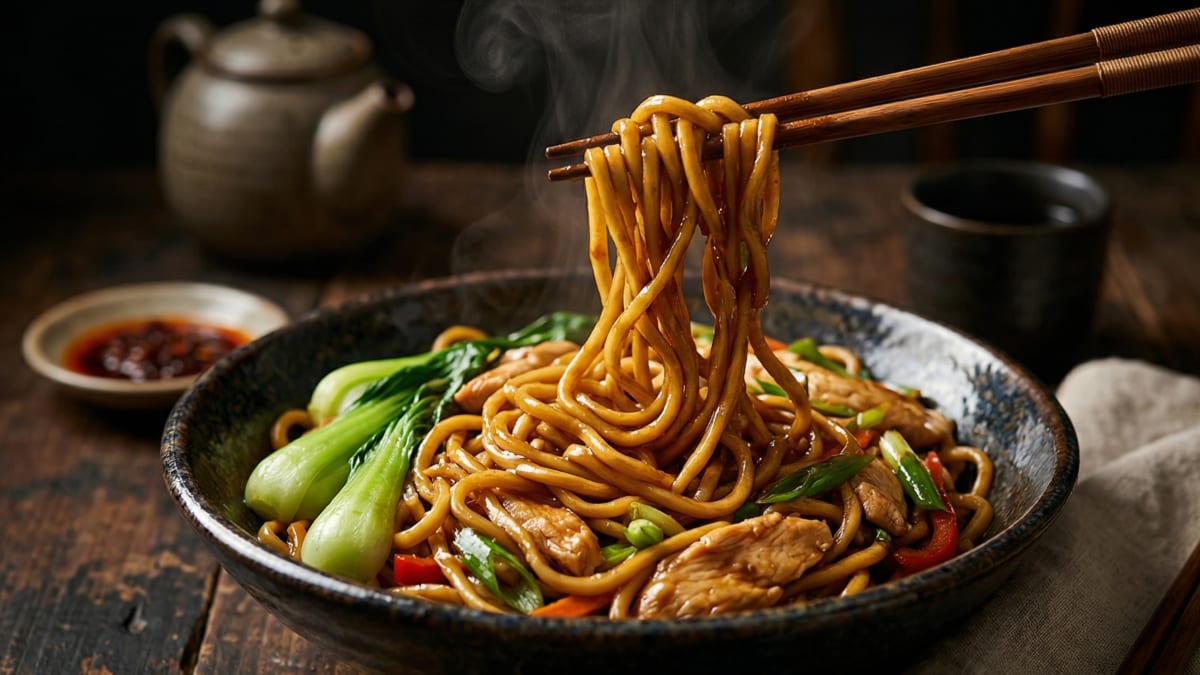
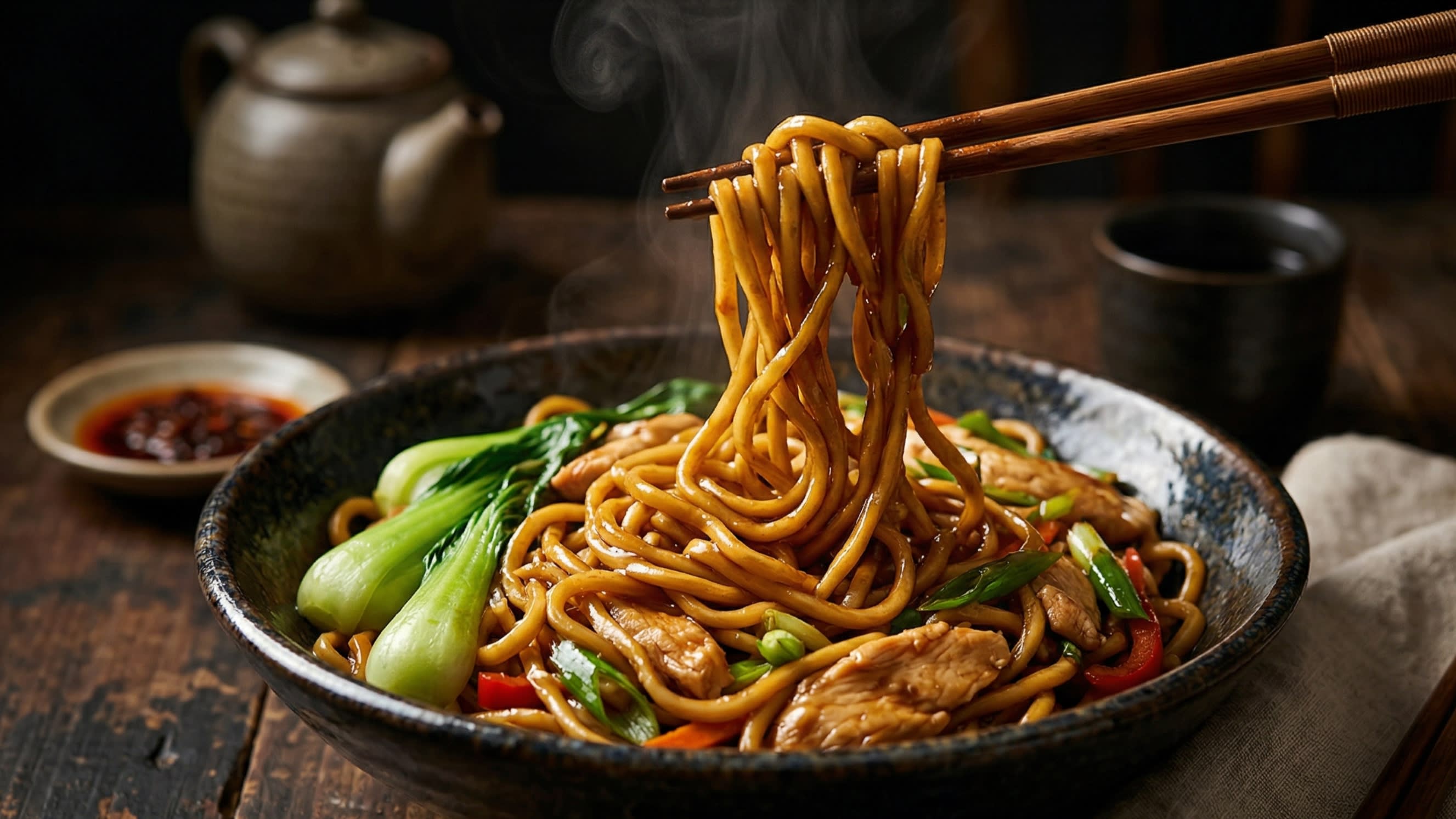
🍜 Introduction: The Ultimate Sauce Delivery System
When the late-night craving for Chinese takeout hits, there is one dish that I always find myself turning to: Lo Mein (捞面 - Lāomiàn). It is the quintessential comfort food—a satisfying tangle of thick, chewy egg noodles, crunchy garden-fresh vegetables, and tender protein, all harmonized by a deeply savory, umami-rich brown sauce.
However, replicating this experience at home is a common point of frustration. I’ve spent years experimenting, and I’ve found that most home cooks make the mistake of treating Lo Mein like a standard stir-fry. When you fry these noodles as you would in a heavy-duty wok at a high heat, you often end up with a brittle, broken mess. Or worse, a dry, clumped heap sitting in a watery, bland sauce at the bottom of the bowl.
To achieve that elusive, restaurant-quality result, we need to rethink our approach. Today, I’m going to share the science behind the perfect noodle and the specific techniques that make a truly authentic Lo Mein, all ready in just 15 minutes. If you enjoy this, you might also want to master my Ultimate Beef Chow Fun (Gon Chau Ngau Ho) or explore the delicate textures in my Ultimate Buddha’s Delight (Luohan Zhai) guide.
🔬 The Etymology: What Does “Lo Mein” Actually Mean?
To master this dish, we must first distinguish between the two titans of the noodle world: Chow Mein (炒面) and Lo Mein (捞面).
In Chinese, the verb Lāo (捞) translates to “dredge,” “scoop up,” or “toss.” Unlike its crispy cousin Chow Mein—where parboiled noodles are scorched in hot oil to create a smoky, charred finish—Lo Mein noodles are boiled until perfectly tender. They are then drained and gently tossed in a wok with a rich, heavily reduced sauce.
In the Chow Mein world, the noodle is the hero, often standing alone with a light coat of flavor. But with Lo Mein, the noodle acts as a vessel, a hungry sponge designed to capture every drop of a velvety, intense glaze. I find that when I treat the sauce as the star, the result is infinitely more satisfying.
🧬 The Secret to the Noodle: “Jindao” and Alkaline Water
Have you ever wondered why your local takeaway noodles are so bouncy, springy, and resilient? The secret lies in a concept called Jìndào (劲道)—a term that perfectly describes a noodle with the ideal “chew” or “snap.”
The industry secret is Jiǎnshuǐ (碱水), or alkaline water. By introducing an alkaline component into the dough, the pH level shifts, which miraculously tightens the gluten structure and imparts a signature yellow hue. This chemical process keeps the noodles from melting into a mushy state, even when they’ve been sitting in a rich sauce.
When I shop for ingredients, I skip the standard pasta aisle entirely. I head straight for the refrigerated section of an Asian grocer, looking for packages labeled “Fresh Egg Noodles” or “Lo Mein Noodles.” They should feel dense and look distinctly golden. If you are ever in a pinch, don’t despair; adding a teaspoon of baking soda to your boiling water when cooking standard Italian linguine can mimic this effect, though fresh noodles are always my preference.
🍯 The Ultimate Sauce Matrix: “Guazhi” (挂汁)
The hallmark of a professional Lo Mein is a technique called Guàzhī (挂汁), or “hanging the sauce.” The goal is for the liquid to have enough body that it coats the noodles without pooling into a soup.
My sauce base is a carefully balanced trio:
- Oyster Sauce (蚝油 - Háoyóu) for that deep, briny umami.
- Dark Soy Sauce (老抽 - Lǎochōu) to provide a rich, mahogany color.
- Light Soy Sauce (生抽 - Shēngchōu) to contribute the core salty flavor.
When balanced correctly and thickened with a cornstarch slurry, the result is a glossy, savory glaze that I promise will make you never want to order takeout again.
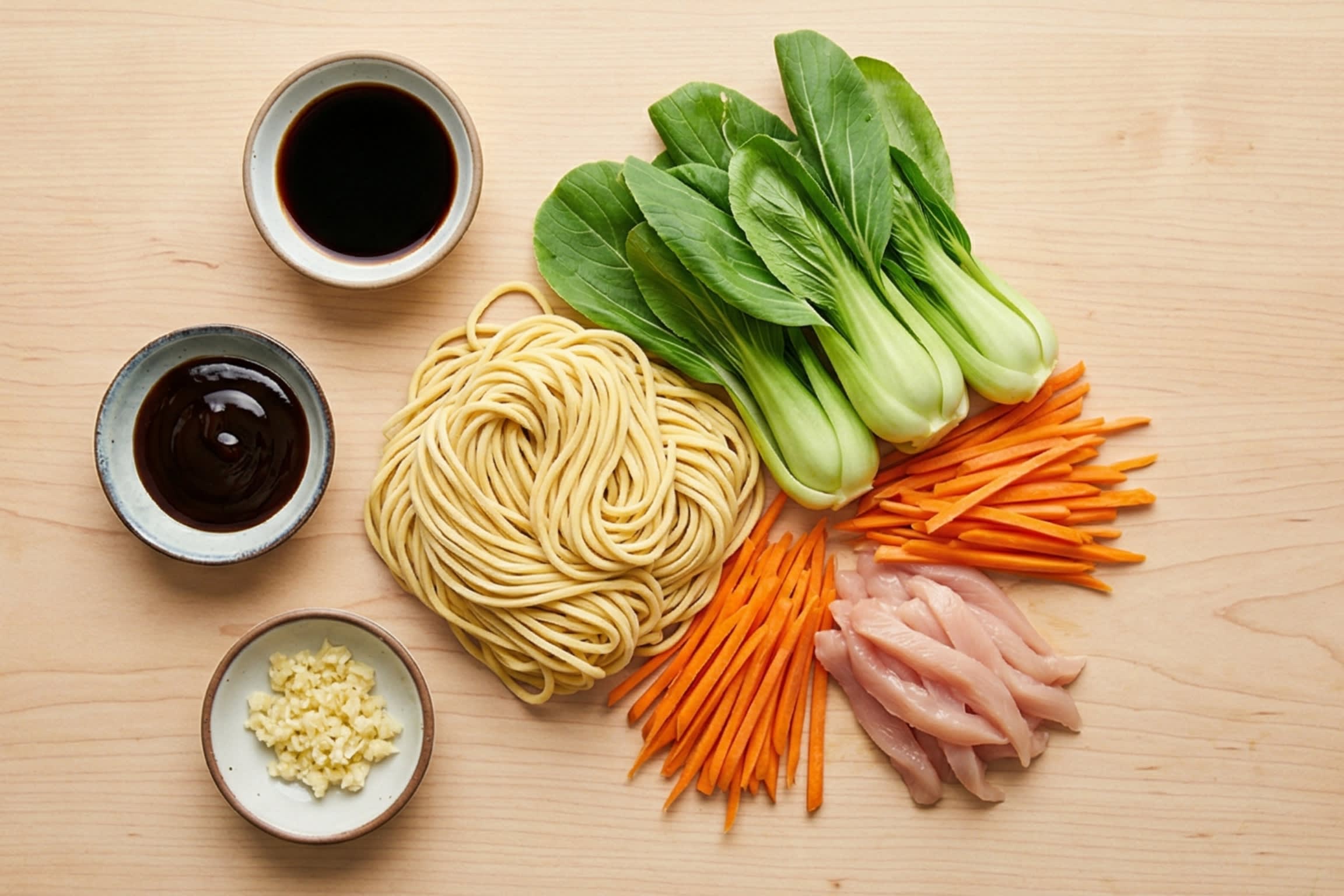
| Component | Ingredient Details |
|---|---|
| Protein | 150g sliced chicken breast/thigh |
| Noodles | 250g fresh thick egg noodles (碱水面) |
| Aromatics | 3 cloves minced garlic (蒜末), 2 stalks scallions |
🍳 Step-by-Step Instructions
1. The Velvet Marination: I always start by marinating my chicken in a mixture of light soy sauce, cornstarch, and a splash of Shaoxing wine. This “velveting” process protects the meat from the high heat. I finish it with a drizzle of oil to ensure the strips don’t stick together. Let it rest for 10 minutes—it makes all the difference in tenderness.
2. The Sauce Matrix: In a small bowl, whisk together your oyster sauce, light soy sauce, dark soy sauce, sugar, white pepper, chicken broth, and that critical 1 tsp of cornstarch. Having this prepared before you fire up the stove is the key to a stress-free experience.
3. The Noodle Blanch: Drop your fresh noodles into boiling water. They typically finish in under 3 minutes. I keep a close watch; as soon as they reach that Jindao bite, I drain them and immediately rinse with cold water to halt the cooking process. A quick toss in sesame oil keeps them from turning into a sticky lump.
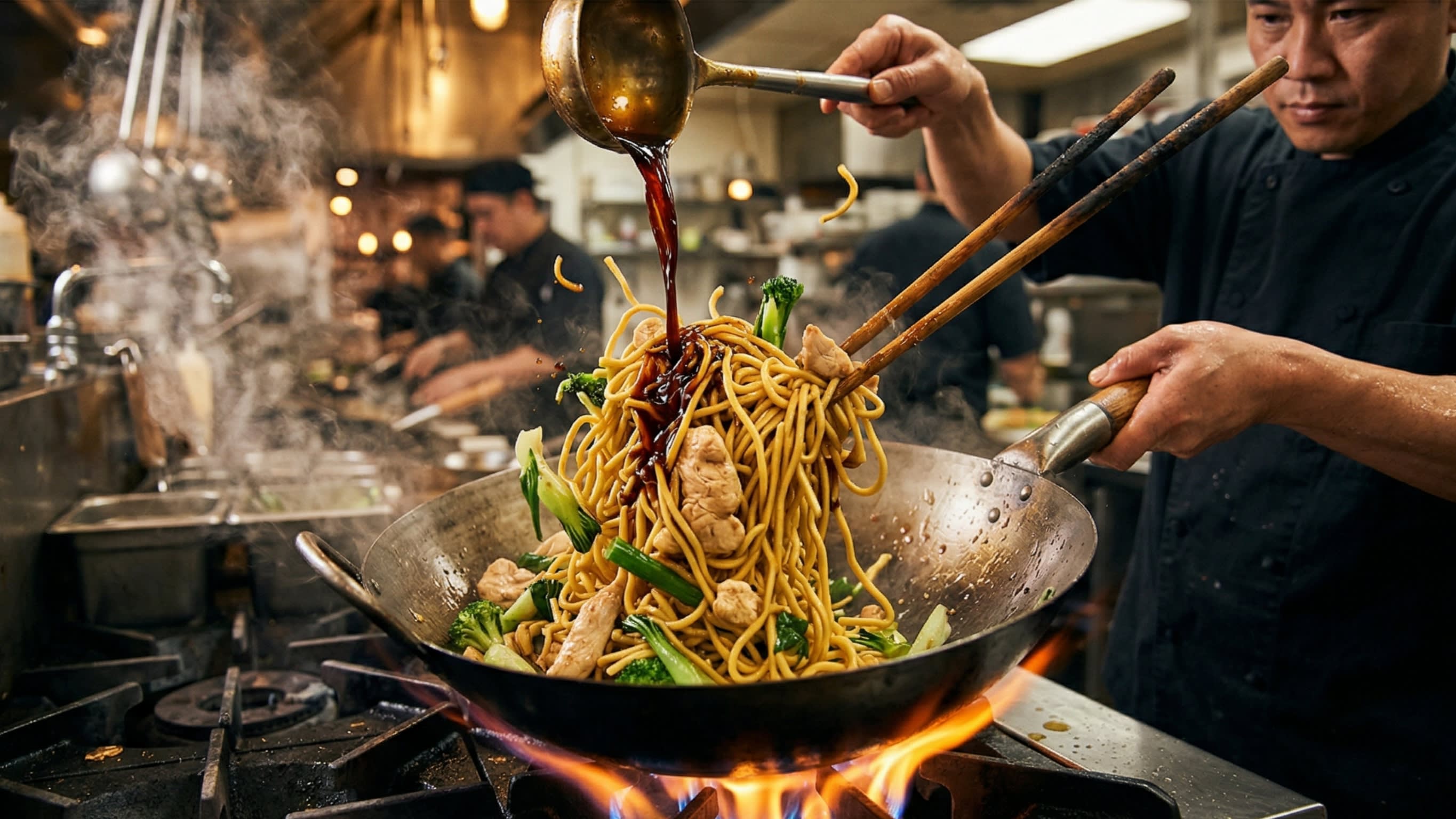
4. The Searing: Get your wok smoking hot. Sear the marinated chicken until golden. Remove the chicken, then quickly flash-fry your aromatics—the garlic and scallions—followed by the carrots and Baby Bok Choy (小白菜 - Xiǎobáicài).
5. The Final Toss: Reunite the chicken and noodles with the vegetables. Give your sauce bowl one final stir to ensure the cornstarch is incorporated, then pour it over the contents. Turn the heat to maximum. Using tongs or long chopsticks, lift and toss the ingredients. The heat will activate the cornstarch, and within seconds, you’ll see the sauce thicken and begin to “hang” beautifully onto every noodle strand.
💡 Pro Tips for the Home Curator
When I first started making this, I struggled with the sauce consistency. If you find your sauce is too thin, don’t panic! Just keep the wok on high heat for another thirty seconds; the reduction happens very quickly once the cornstarch hits the high heat.
If you are looking to stock your pantry like a pro, I always ensure I have a bottle of Lee Kum Kee Premium Oyster Sauce handy, along with Pearl River Bridge Dark Soy Sauce for that deep mahogany color and a splash of Kadoya Toasted Sesame Oil to finish. These staples will serve you well in many other dishes, such as my Ultimate Chinese Garlic Bok Choy. Happy cooking, and remember: the key to great Lo Mein is in the final toss!
Disclaimer: As an Amazon Associate, ChinaCurator earns from qualifying purchases.