🍚 Introduction: The True Test of a Chef
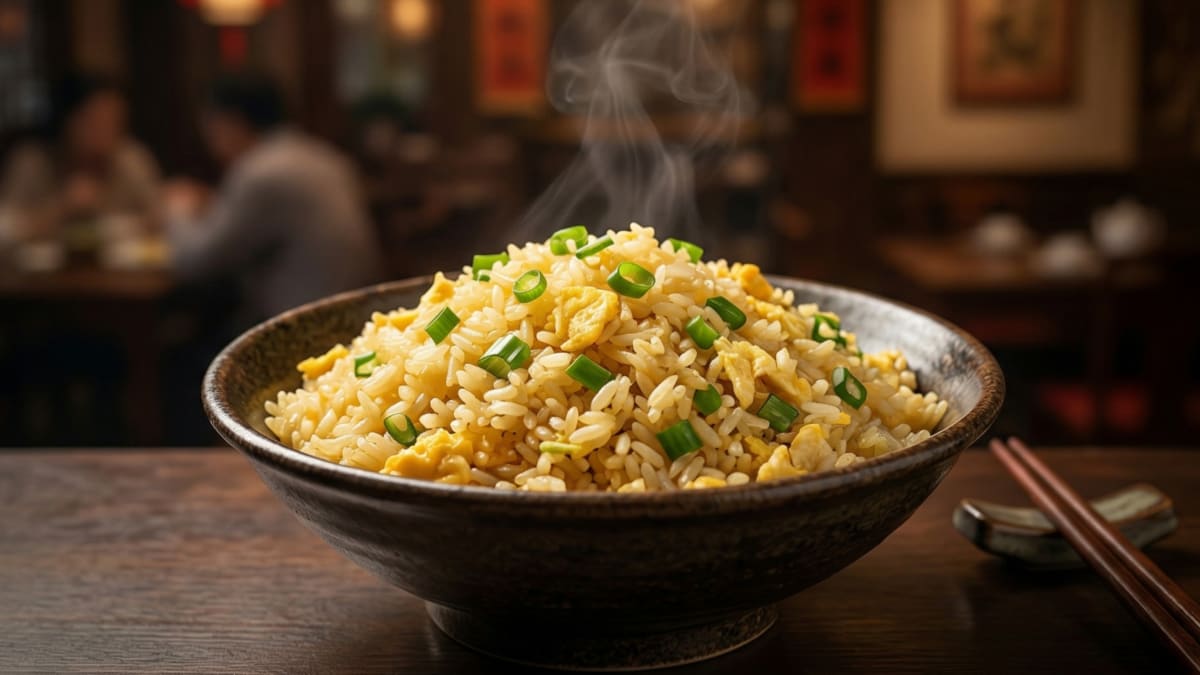
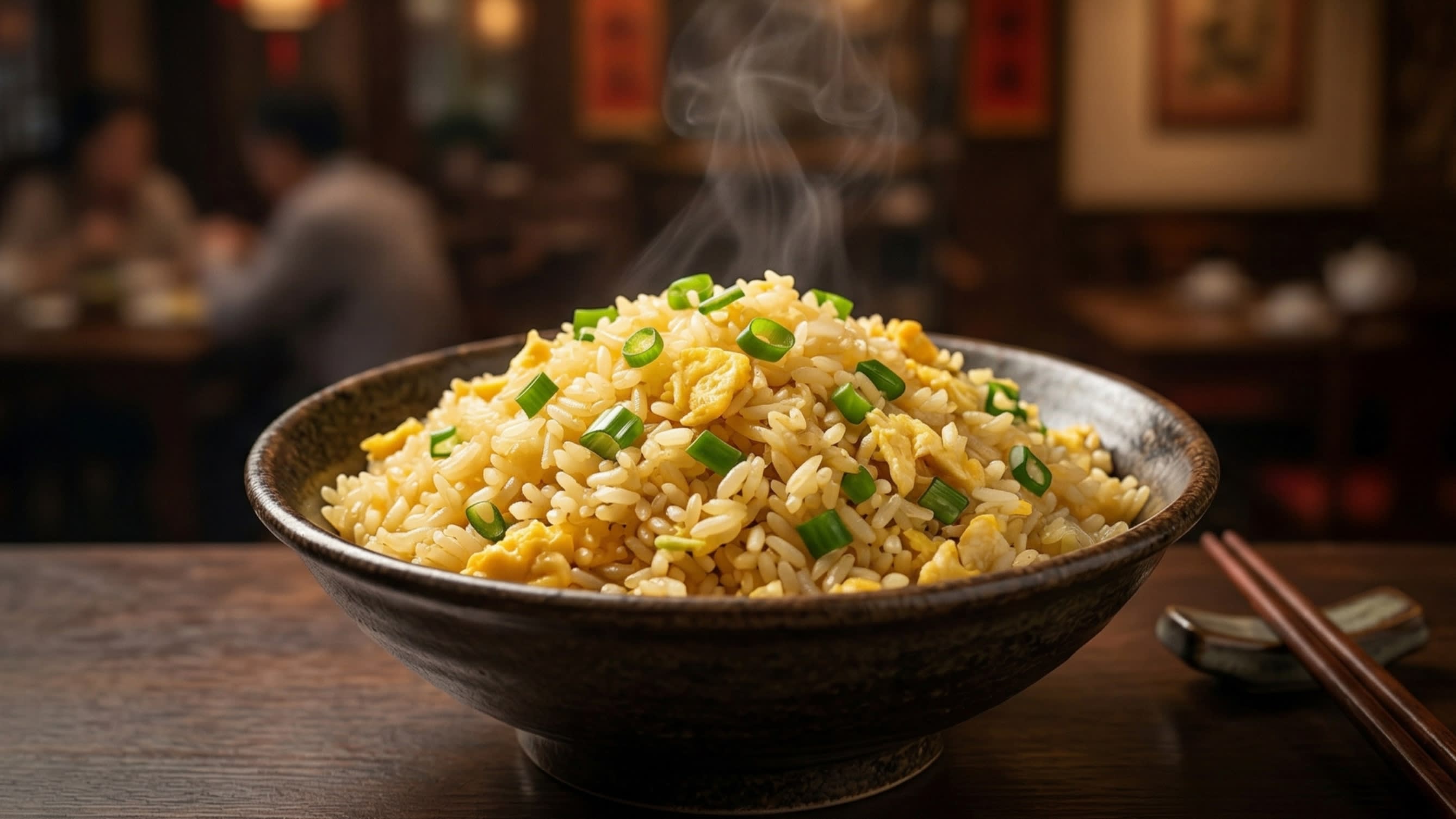
In the culinary world of China, there is a legendary saying: “The ultimate test of a chef’s skill is not a complex banquet dish, but a simple bowl of Egg Fried Rice.” Egg Fried Rice (蛋炒饭 - Dànchǎofàn) is perhaps the most universal comfort food in the Chinese diaspora. Whether it is served at a bustling midnight street stall in Chengdu or tucked away in a quiet neighborhood eatery in Hong Kong, the hallmarks of perfection remain identical. The rice must be Lìlì fēnmíng (粒粒分明)—meaning every single grain must be distinct, separate, and pleasantly chewy, never mushy or clumped.
In the West, many takeout spots mask poorly cooked rice by drowning it in dark, heavy sauces or bulk-adding frozen peas and carrots. But true, authentic Chinese fried rice is an exercise in minimalism. It relies purely on the alchemy of rice, eggs, scallions, oil, and intense heat. If you’ve struggled to recreate that specific, addictive texture at home, you aren’t alone. I spent years in my own kitchen wondering why mine turned into a sad, sticky clump until a local chef shared the “restaurant secrets” that changed everything.
🔬 The Science of Perfect Fried Rice
If your homemade fried rice always turns out wet, sticky, or bland, you are likely missing one of the fundamental principles of wok-based cooking. To achieve that professional texture, you must respect the physics of the kitchen.
1. The Golden Rule: Leftover Rice (隔夜饭)
You absolutely cannot use freshly cooked, piping hot rice for this. Fresh rice is packed with surface moisture. When it hits a hot wok, it creates steam, and that steam turns your beautiful rice into porridge.
You must use Géyèfàn (隔夜饭), or “overnight rice.” When cooked rice sits in the refrigerator, a chemical process called starch retrogradation takes place. The air in the fridge pulls moisture from the surface, firming the grain. This makes the rice slightly harder and drier—exactly what we need for frying. If you’re short on time, spread fresh rice on a baking sheet and freeze it for 20 minutes to achieve the same result.
2. The Art of “Gold Wrapping Silver” (金包银)
Chefs often use a technique called Jīnbāoyín (金包银), or “Gold Wrapping Silver.” The “Silver” is the white rice; the “Gold” is the egg yolk. By massaging raw egg yolk into cold rice before it hits the wok, you coat every individual grain in a protective, golden layer. This stops the starch from sticking to the wok and ensures that every single grain is perfectly seasoned and distinct.
3. Mastering “Wok Hei” (锅气)
Wok Hei (锅气), or the “breath of the wok,” is that elusive, smoky aroma found in restaurant dishes. You can’t replicate it perfectly on a home electric stove, but you can get close by ensuring your carbon steel wok is scorching hot before adding any ingredients. The searing heat is what gives the rice its characteristic bounce.
🛒 Ingredients List
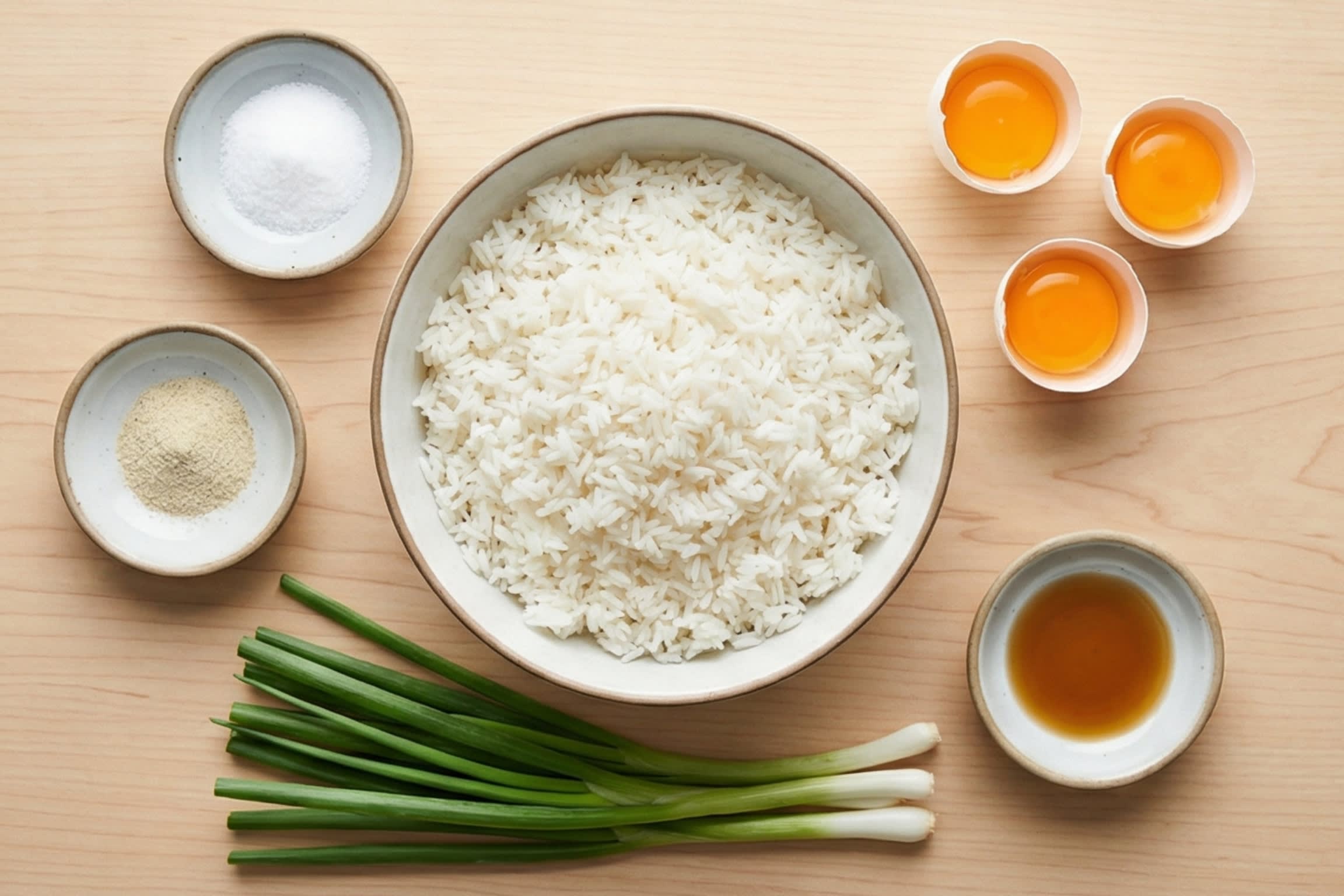
Because this dish is beautifully simple, the quality of your base ingredients matters immensely.
| Category | Ingredient | Notes |
|---|---|---|
| Base | 3 cups Cold Jasmine Rice | Must be day-old/refrigerated. |
| Protein | 3 Large Eggs | Fresh yolks for that vibrant color. |
| Aromatic | 3 stalks Green Onion | Separate whites from greens. |
| Seasoning | Light Soy Sauce | Use sparingly to avoid sogginess. |
🍳 Step-by-Step Instructions
1. The Secret Massage: Take your cold, leftover rice from the fridge. It will likely be in a solid brick. Use your clean hands to physically crumble it until every single grain is separated. If you skip this, you’ll end up with lumps of cold rice in the middle of your stir-fry.
2. Coat the Grains: Beat two eggs in a bowl. For the third egg, separate the yolk and white. Stir the yolk into your rice until every grain is pale yellow. Save the leftover egg white for the scramble later.
3. Scramble: Heat your carbon steel wok over high heat until it begins to smoke slightly. Add oil. Quickly scramble your eggs until they are just set but still soft. Remove them from the wok immediately.
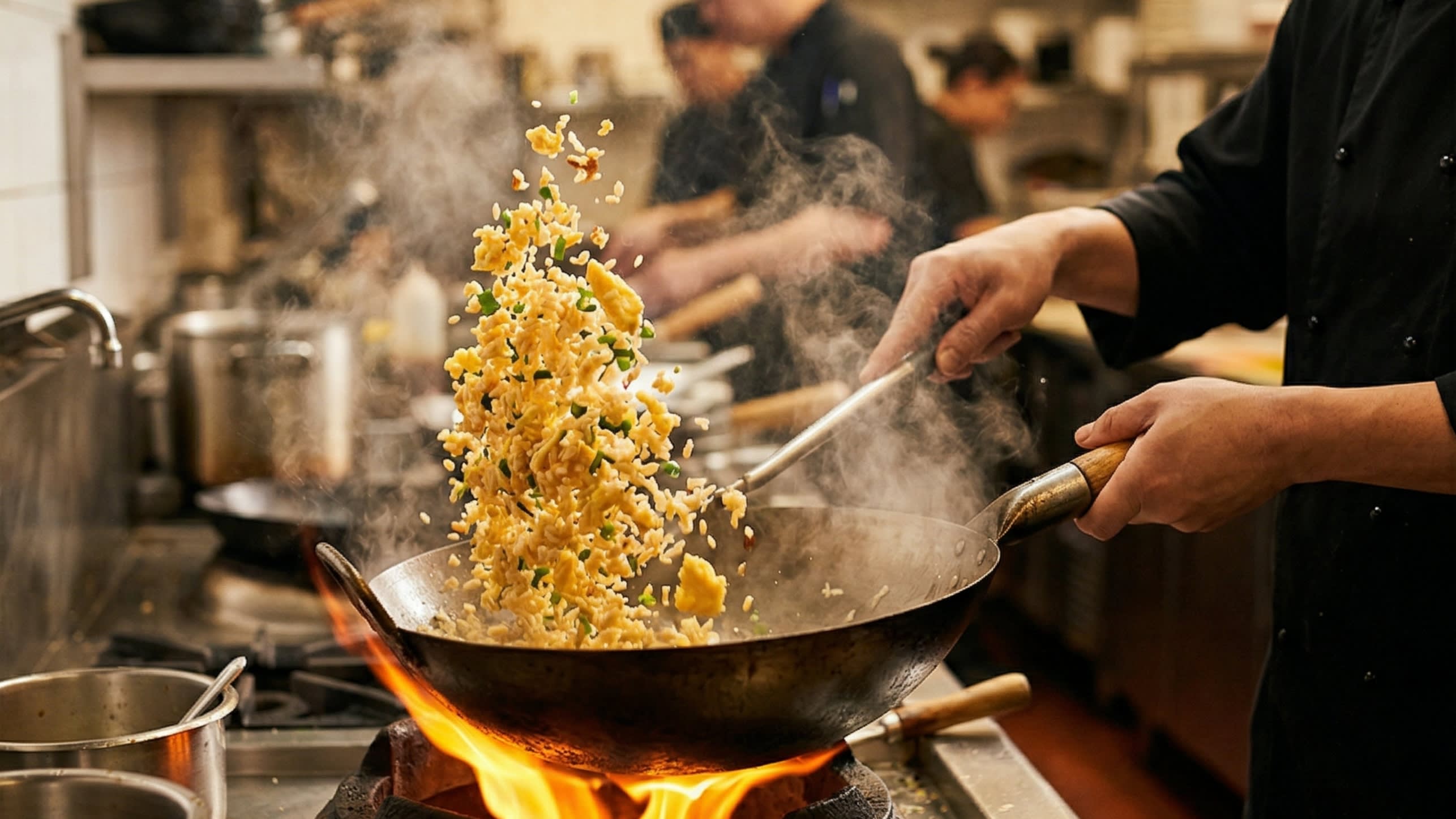
4. Aromatics & Toss: Wipe your wok. Reheat until smoking. Add oil and the white parts of your scallions. Once fragrant (about 10 seconds), pour in the yolk-coated rice. Press it flat against the wok to encourage searing, then toss aggressively. You are aiming for that “popping” sound as grains jump against the steel.
5. Seasoning (The Edge Technique): Add salt and white pepper. Pour your light soy sauce around the rim of the wok, not directly onto the rice. The intense heat on the edge of the metal will vaporize the sauce, infusing the rice with a smokiness that liquid soy sauce alone cannot provide.
6. The Reunion: Add the scrambled eggs back in. Chop them up with your spatula while mixing them into the golden grains. Turn off the heat and fold in the green onion tops and a dash of toasted sesame oil.
💡 Why This Matters
This isn’t just about food; it’s about the philosophy of the kitchen. In China, fried rice is the ultimate “waste-not” dish, honoring the leftovers of a previous meal. Mastering this dish is a gateway to understanding other staples. If you love this, you should also try my guide to Authentic Cantonese Char Siu (Chinese BBQ Pork) to add a savory meat dimension to your rice.
If you find yourself needing more practice with restaurant staples, consider exploring my deep dive into Authentic Egg Drop Soup, which teaches you the exact same heat-management skills used in this recipe.
🎥 Watch the 15-Minute Technique
Remember, the “restaurant secret” isn’t a magical ingredient—it’s the temperature of your pan and the state of your rice. Take your time, get the heat right, and you will never order takeout fried rice again.
Disclaimer: As an Amazon Associate, ChinaCurator earns from qualifying purchases.