
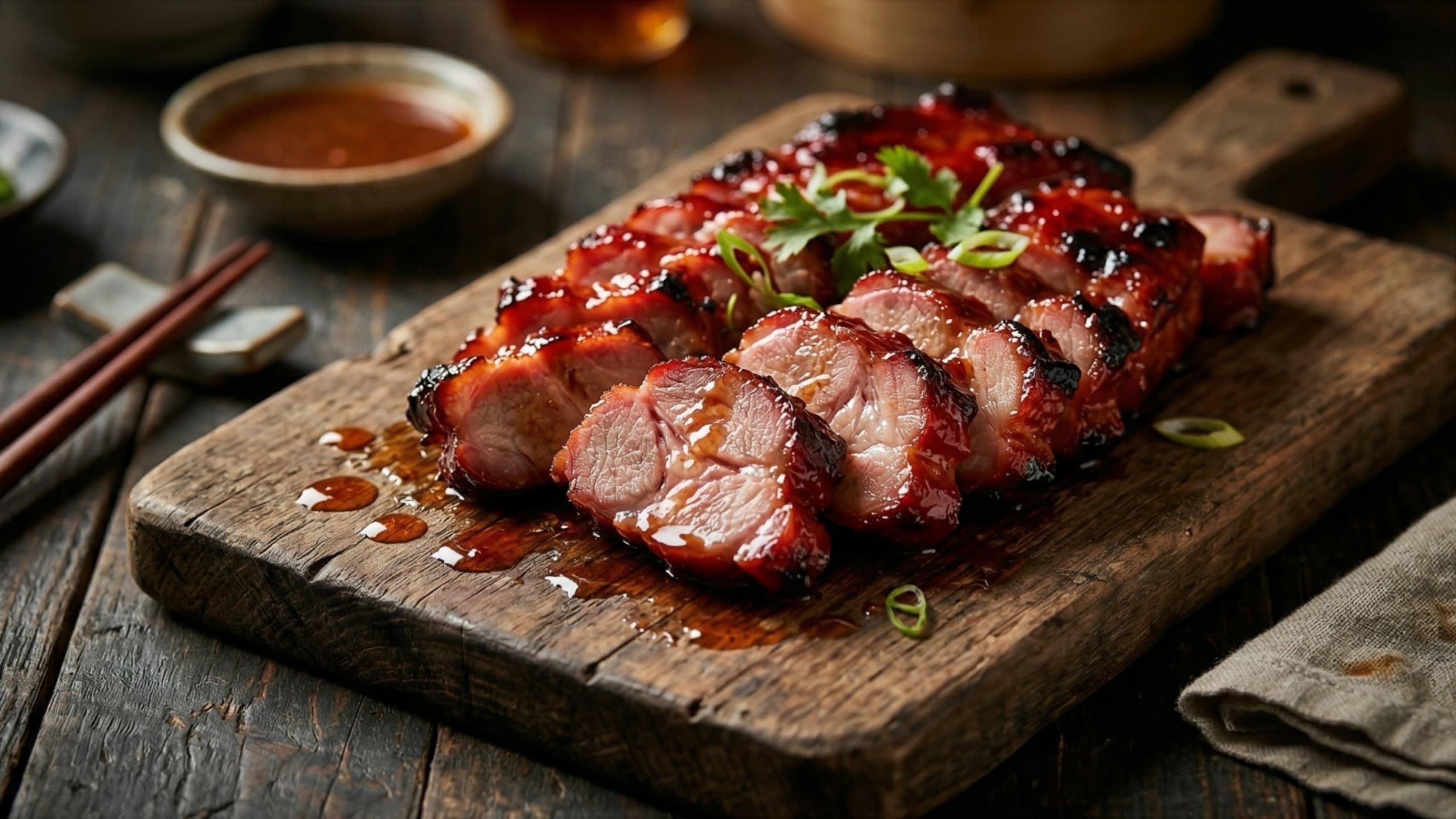
🥩 Introduction: The Crown Jewel of Cantonese BBQ
When I step into the bustling corners of Guangzhou or navigate the vibrant, neon-lit laneways of Hong Kong, my senses are immediately hijacked by the hypnotic aroma of roasting meat. The culprit is always the same: the glowing display windows of a Shāowèi (烧味 - Cantonese Roasted Meats) shop. Hanging in rows, dripping with a thick, syrupy glaze, are the ruby-red treasures that define Cantonese cuisine.
This is Char Siu (叉烧 - Chāshāo), the undisputed crown jewel of Chinese BBQ.
The name “Char Siu” translates simply to “Fork Roasted.” In the kitchens I’ve frequented, I’ve watched chefs skewer long strips of seasoned pork onto massive iron forks, suspending them over glowing charcoal or within deep, cylindrical brick ovens. The intense, dry heat sears the exterior into a candy-like crust, while the fat renders and drips onto the coals, sending back plumes of aromatic smoke that permeate the meat.
When I make this at home, I’m chasing that specific memory—the sticky, sweet, caramelized 煳焦边 (Hújiāobiān - charred edges) and the savory, melt-in-your-mouth interior. If you’ve been relying on grocery store bottles of “BBQ sauce,” you’ve been doing it wrong. Let’s dive into the science of true Cantonese roasting.
🔬 The Three Pillars of Perfect Char Siu
To replicate the mastery found in a heritage shop, I adhere to three non-negotiable rules.
1. The Cut: Reject the Loin
I see many home cooks reach for pork loin, thinking the lack of fat makes it “cleaner.” In reality, roasting it at the high temperatures required for Char Siu turns lean loin into a dry, fibrous disaster. You need Pork Butt or Pork Shoulder, known to local butchers as Méihuāròu (梅花肉). The “plum blossom” marbling of fat is essential—as it renders, it bastes the muscle fibers from the inside out. For those who prefer a decadent, buttery texture, I occasionally swap in strips of Pork Belly (五花肉 - Wǔhuāròu), which yields an even more luxurious result.
2. The Color: Beyond Food Dye
I shudder when I see recipes suggesting red food coloring. The authentic color comes from Fermented Red Bean Curd (南乳 - Nánrǔ). These fermented tofu cubes, preserved with red yeast rice, possess an earthy, savory, and slightly funky profile. Mashing them into a marinade provides that deep, regal red hue naturally. It’s an essential transformation; without it, you are just making brown pork.
3. The Glaze: The Maltose Secret
The final 10 minutes of the roast are a dance between heat and sugar. I always use Maltose (麦芽糖 - Màiyátáng) rather than honey. Honey is fickle—it scorches and turns bitter under high heat. Maltose, however, is a thick, viscous wonder that withstands the broiler, forming a glass-like, sticky candy shell that captures the true essence of Cantonese BBQ.
🍚 Pop Culture Phenomenon: “Sorrowful Rice” (黯然销魂饭)
I cannot write about Char Siu without honoring the dish’s legendary status in pop culture. In the 1996 film The God of Cookery (食神), there is a bowl of rice topped with Char Siu, a fried egg, and bok choy that is so transcendent it brings the judge to tears. They called it “Sorrowful Rice” (黯然销魂饭 - Ànrán Xiāohún Fàn). It’s a humble comfort, the kind of meal I order when I need a reminder of what honest, simple cooking can achieve.
Whether you are enjoying this as a meal or learning about authentic Chinese Jiaozi, the philosophy remains: respect the ingredients.
🛒 Ingredients List
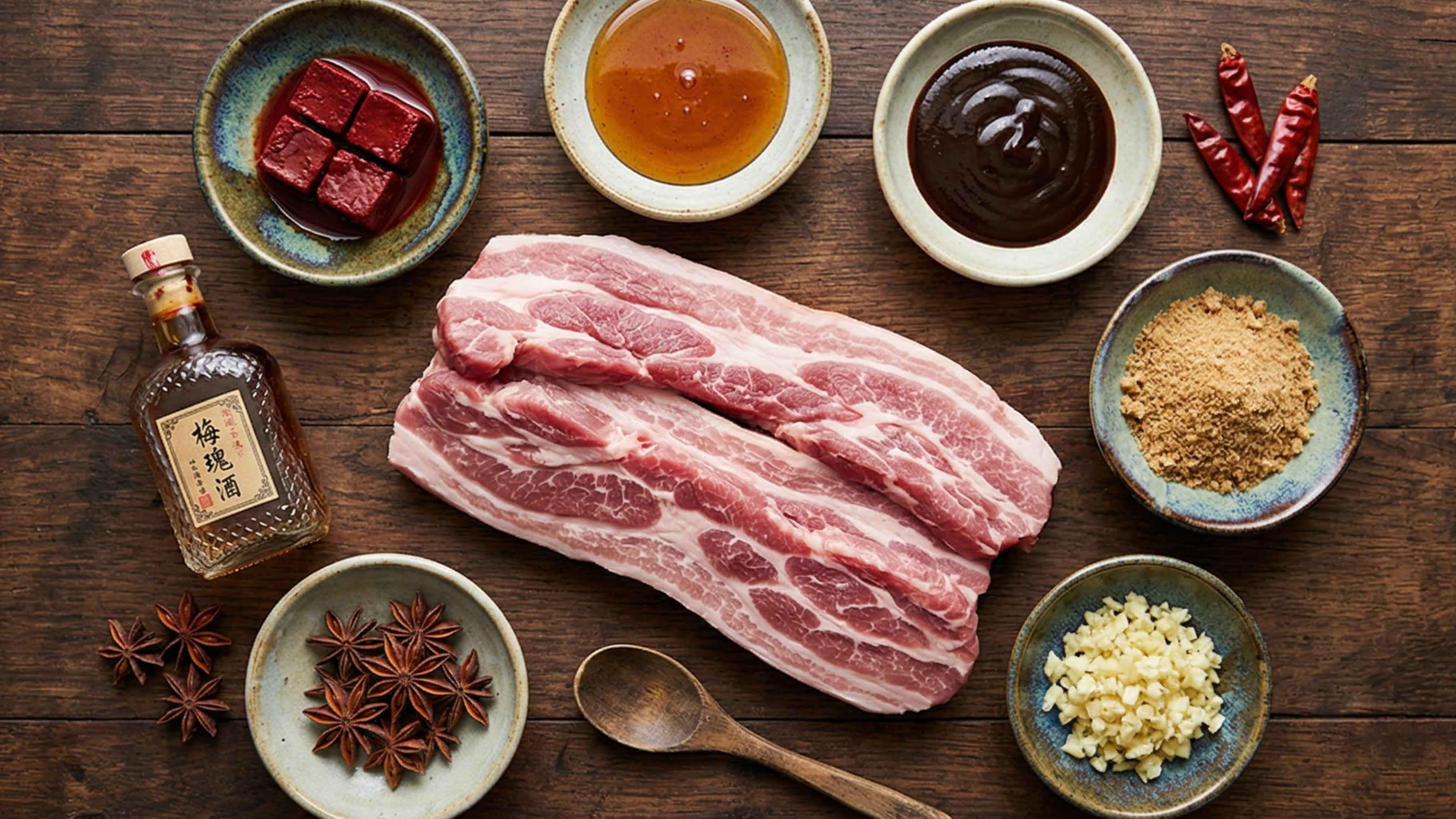
| Category | Items |
|---|---|
| The Meat | 1kg Pork Shoulder/Butt (Méihuāròu), cut into 2-inch thick strips. |
| Marinade | 2 cubes Fermented Red Bean Curd (Nánrǔ) + 1tbsp liquid, 3tbsp Hoisin Sauce, 1tbsp Soy Sauce, 1tbsp Dark Soy Sauce, 2tbsp Sugar, 1tbsp Oyster Sauce, 1tbsp Chinese Rose Wine, 1tsp Five-Spice, Garlic, Ginger. |
| Glaze | 3tbsp Maltose Syrup, 1tbsp Hot Water, 1tbsp Reserved Marinade. |
🍳 Step-by-Step Instructions
1. The 24-Hour Marinade (Patience is Key): I always prepare the marinade by smashing the fermented bean curd into a smooth paste. Whisk in the hoisin, both soy sauces, sugar, oyster sauce, rose wine, five-spice, and aromatics. Coat the pork strips thoroughly in a sealed bag and refrigerate for 24 to 48 hours. This is where the magic happens—the proteins break down and the aromatics penetrate the core.
2. Prepare the Oven Environment: Preheat your oven to 400°F (200°C). Line a tray with heavy-duty foil and place a wire rack over it. Critical Step: Pour a cup of water into the base of the tray. This isn’t just to catch drips—it creates a humid environment that prevents the sugars from scorching too quickly, keeping the pork juicy.
3. The Roast: Roast the strips on the middle rack for 20 minutes. While it roasts, create your glaze by boiling 1 tablespoon of leftover marinade for safety, then stirring in the maltose and hot water until it’s a glossy, thick syrup.
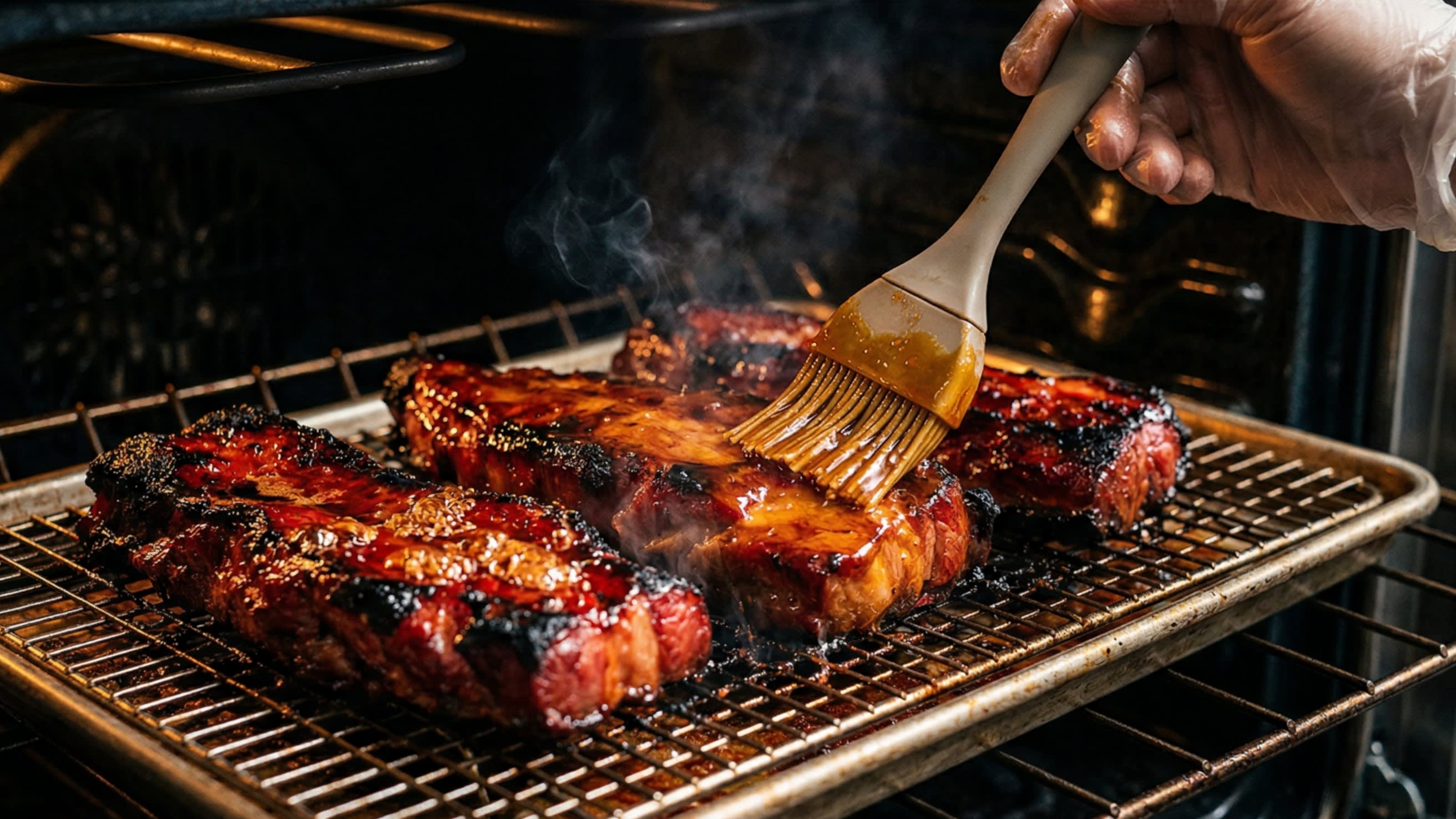
4. Flip and Glaze: Flip the pork, brush with your maltose syrup, and return to the oven for 15 minutes.
5. The Char: Flip one final time, brush heavily, and turn your oven to BROIL (High). Watch this like a hawk for 3–5 minutes. You want the edges to bubble and char until they look like the ones from a Cantonese BBQ Masterclass.
6. Rest: I know you want to eat it now, but please wait 10 minutes. Resting allows the juices to settle. If you slice it now, you lose all that hard-won moisture. Slice against the grain, and serve over rice with a side of blanched greens.
💡 Troubleshooting Common Mistakes
- Tough meat? You likely used lean loin instead of marbled shoulder. Don’t skip the rest time!
- Smoke alarm going off? You ran out of water in the bottom tray. The sugar is burning on the metal. Add a bit more water and keep a closer eye on the pan.
- Color too dull? Increase your ratio of Nam Ru (red bean curd) or use high-quality dark soy sauce.
Cooking Char Siu is a labor of love, but once you master the balance of sweet, savory, and smoke, you’ll never look at takeout the same way again. For more insights on how Chinese food culture bridges the gap between home and history, explore my thoughts on the meditative art of bead rubbing.
🎥 Watch the Technique
Disclaimer: As an Amazon Associate, ChinaCurator earns from qualifying purchases.