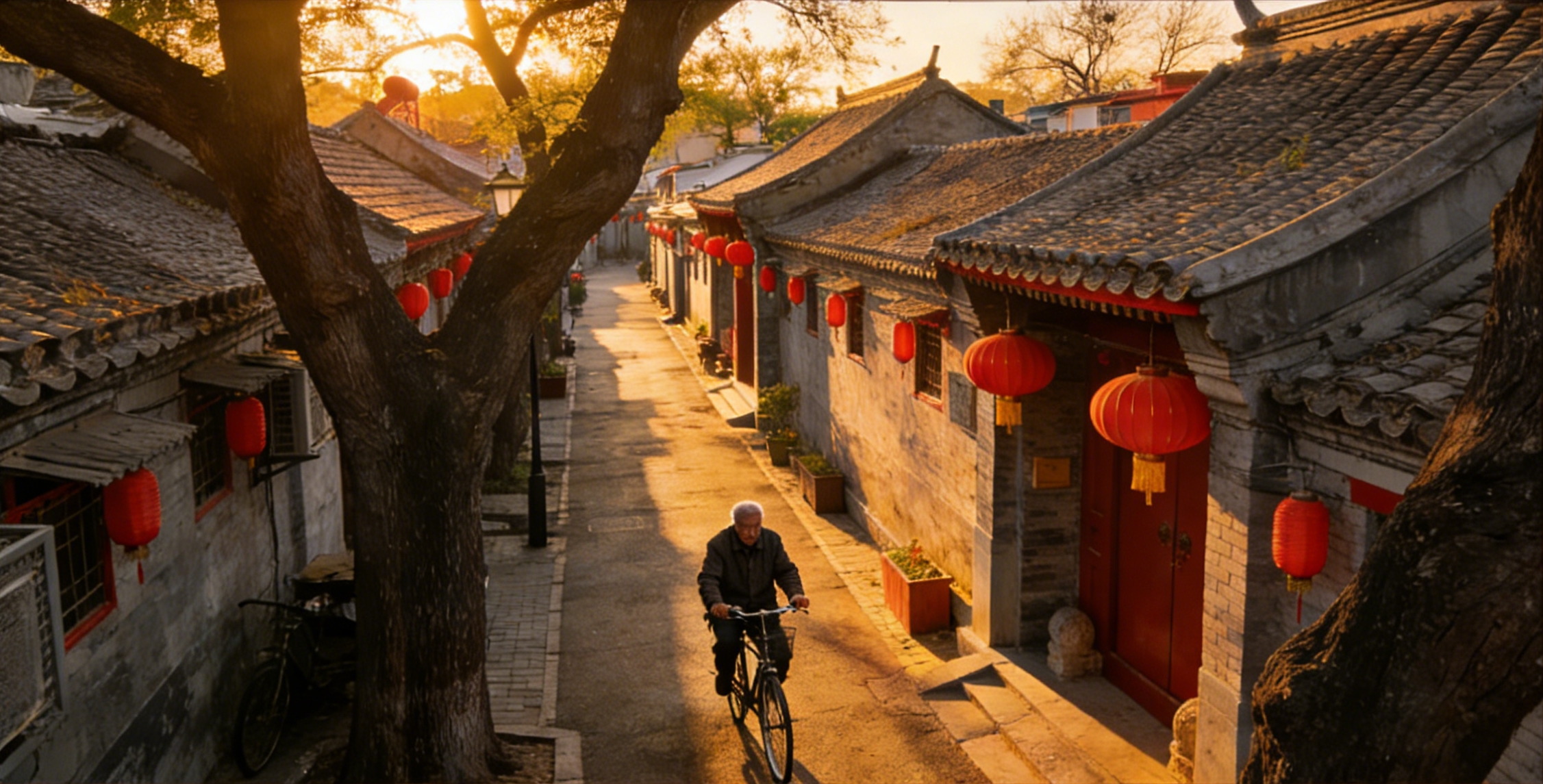
“If I could only recommend ONE Beijing experience to first-time visitors, this would be it. This 6-7 km route isn’t just a walk—it’s a perfectly curated journey through 800 years of living history, combining UNESCO-worthy ancient sites with authentic neighborhoods where locals actually live. Unlike tourist-saturated areas like Wangfujing, this corridor offers genuine cultural immersion with enough English-friendly spots to keep you comfortable. You’ll experience the Beijing that captivated Marco Polo and now enchants expats—all in one unforgettable day.”
📍 Location & Getting There
| Detail | Information |
|---|---|
| 🎯 Start Point | Ditan Park (地坛公园 Dìtán Gōngyuán) North Gate |
| 🧭 Navigation Tip | Search "Ditan Park North Gate" in Apple/Google Maps; Chinese maps work better with the pinyin |
| 🚇 Subway | Line 5 to Hepingli Beijie Station (和平里北街 Hépínglǐ Běijiē), Exit D |
| 💡 Why this matters | Line 5 has English announcements, and Exit D deposits you directly at a clean public restroom and a convenience store for water—essentials foreign travelers appreciate |
🗺️ The Complete Route (see map below)
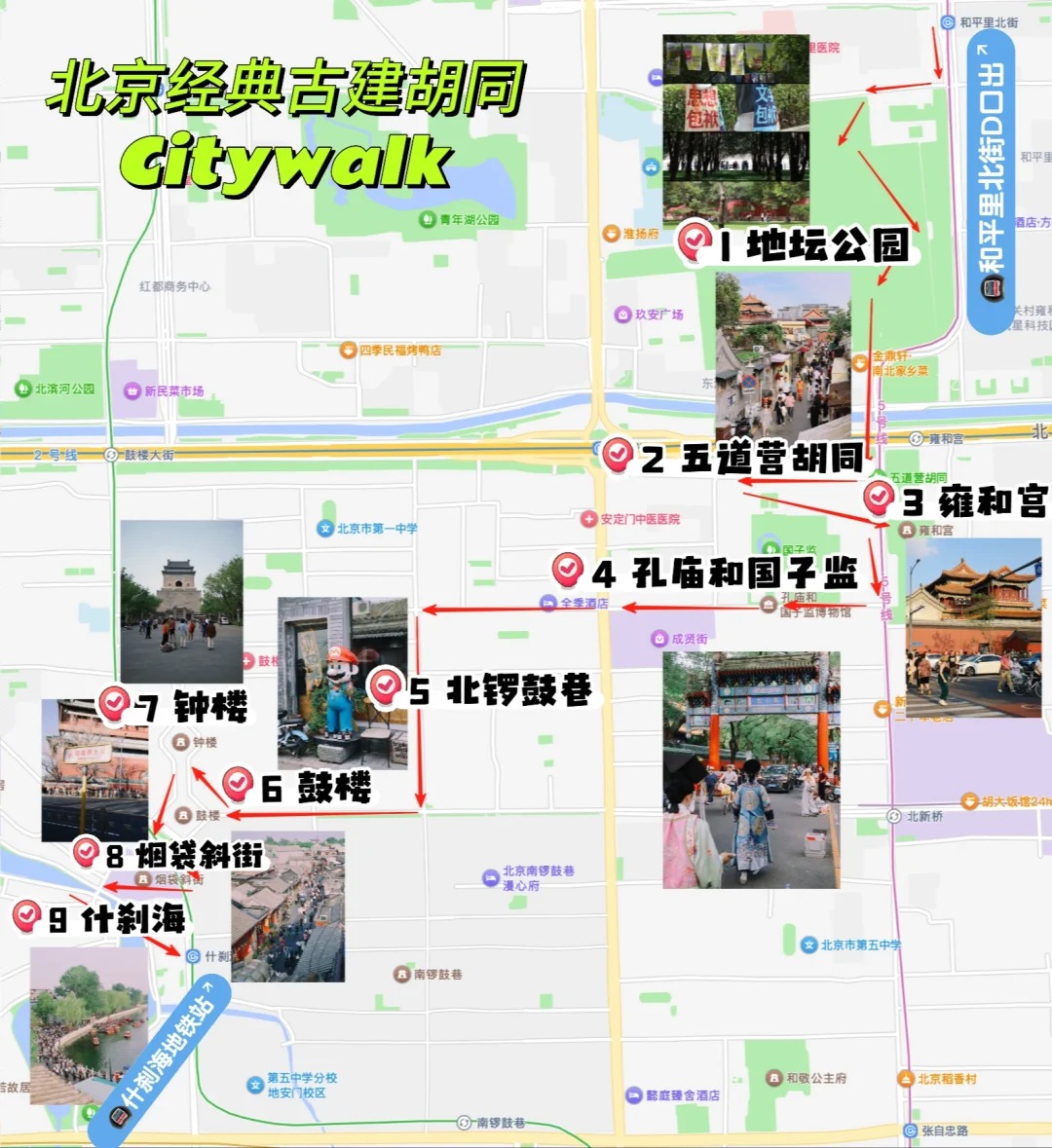
Hepingli Beijie Station (和平里北街站) Exit D ➜ Ditan Park (地坛公园) ➜ Wudaoying Hutong (五道营胡同) ➜ Yonghegong/Lama Temple (雍和宫) ➜ Confucius Temple & Imperial Academy (孔庙 & 国子监) ➜ Beiluoguxiang (北锣鼓巷) ➜ Gulou Dongdajie (鼓楼东大街) ➜ Drum Tower (鼓楼) ➜ Bell Tower (钟楼) ➜ Yandai Xiejie (烟袋斜街) ➜ Shichahai (什刹海) ➜ Shichahai Station (什刹海站)
| 📏 Total Distance: | 6-7 km |
| ⏱️ Time Needed: | 5-7 hours (including breaks) |
🔎 Detailed Breakdown: What Foreign Travelers Need to Know
1️⃣ Ditan Park (地坛公园 Dìtán Gōngyuán)
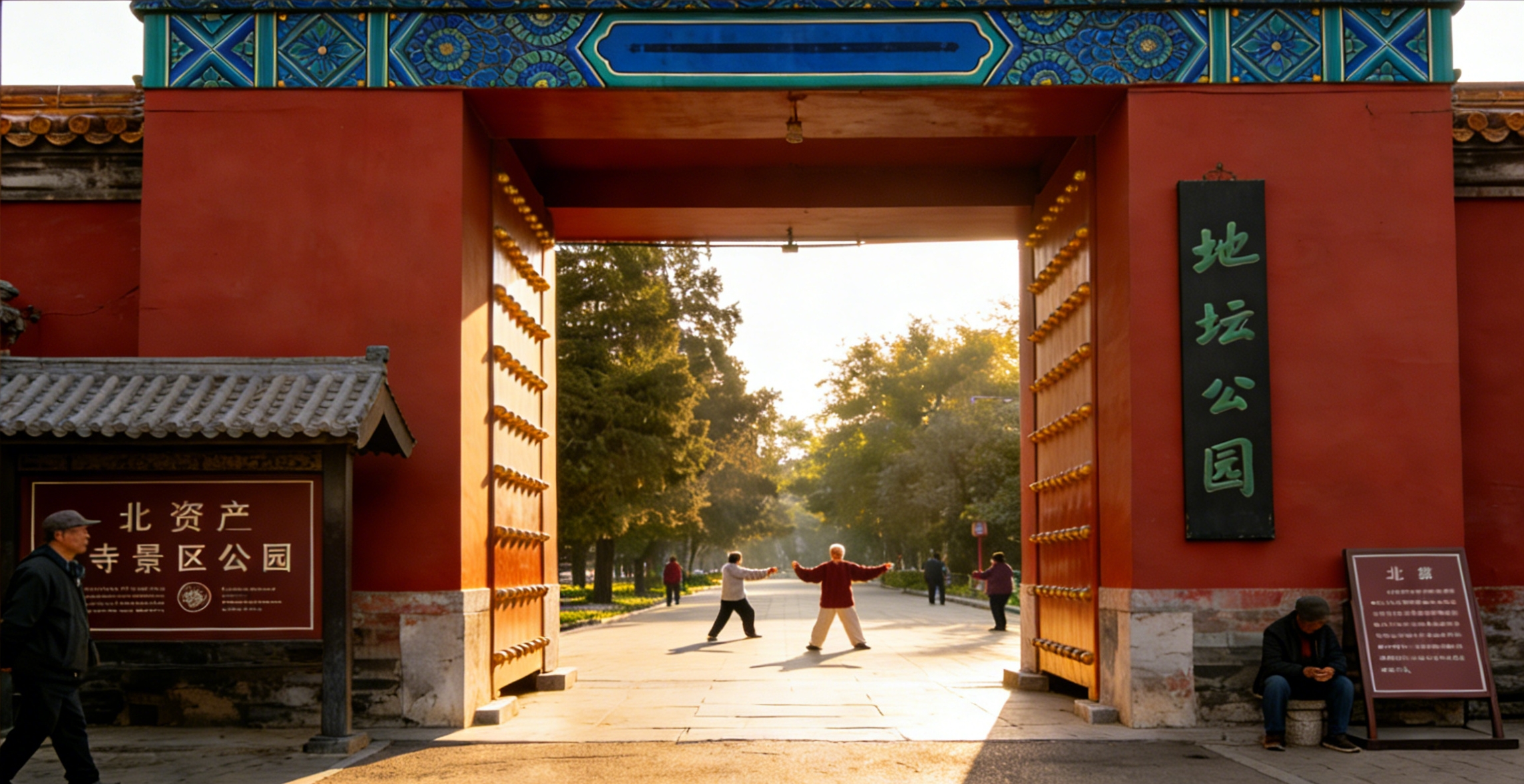
Why it’s special: Most tourists flock to the Temple of Heaven, missing this Ming Dynasty treasure where emperors prayed to the earth god. It’s equally stunning but 90% less crowded. Built in 1530, this is where the emperor performed rituals to ensure bountiful harvests, making it a spiritual counterpoint to the Temple of Heaven’s sky worship. The park’s ancient cypress trees—some over 500 years old—create an atmosphere of profound tranquility rarely found in bustling Beijing.
🌟 For foreign visitors:
- 💰 Cost: Only ¥2 (about $0.30 USD)—incredible value for a UNESCO-caliber historical site
- 📖 The literary connection: Follow the paths of famous Chinese writer Shi Tiesheng, who wrote movingly about his wheelchair journeys here in “I and the Temple of Earth.” His “tree” and “Yu Hua’s tree” are marked—ask any elderly local (“Nin hao, Shi Tiesheng de shu zai nar?”) and they’ll point you there. This is storytelling gold for culturally curious travelers
- 🎷 Music: Don’t be surprised by jazz musicians practicing under ancient cypress trees—a surreal blend of old and new that’s pure Beijing magic. The acoustics are extraordinary
- 🚻 Restrooms: Clean facilities near the north gate; bring your own tissues (standard practice in China)
- 📸 Photo ops: The red walls and round altars are Instagram gold without tourist mobs photobombing you. The “Fangze Altar” at sunset reflects golden light that photographers dream about
- ♿ Accessibility: Paved, flat paths throughout. Wheelchair users can enter from the south gate for easier access to main altars
2️⃣ Wudaoying Hutong (五道营胡同 Wǔdàoyíng Hútòng)
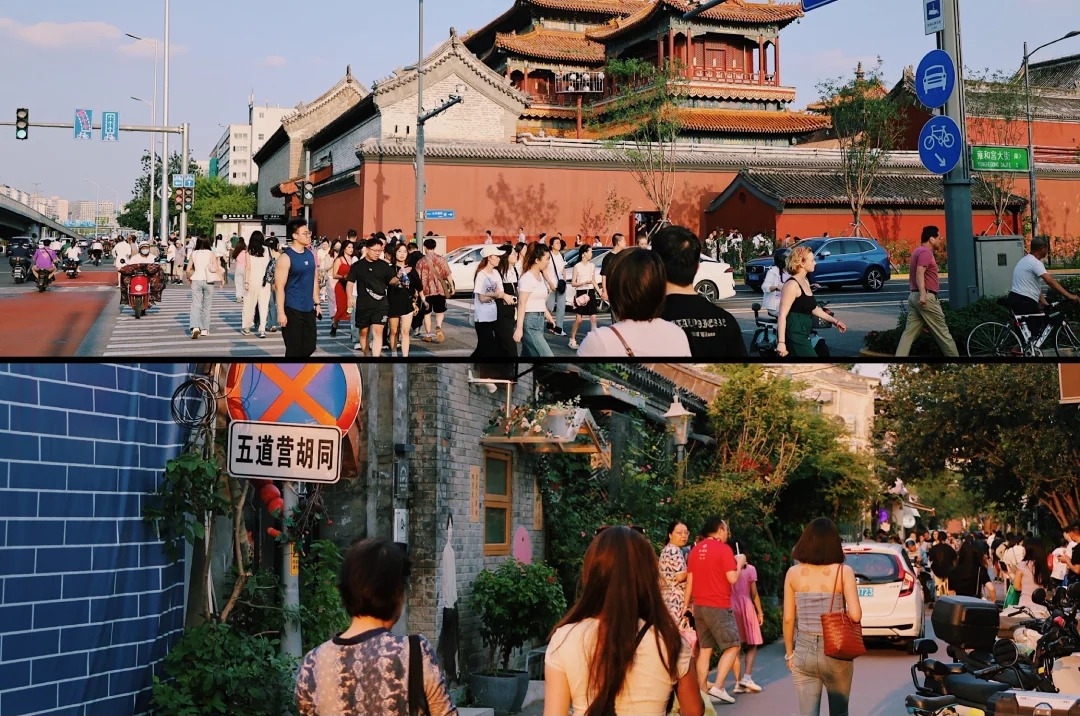
Why it’s special: This is what hutongs are supposed to feel like. While Nanluoguxiang became a tourist carnival, Wudaoying retained its soul—think Brooklyn-meets-Beijing. Originally a military barracks street in the Qing Dynasty, it transformed into a creative corridor where traditional courtyard homes (siheyuan) now house indie boutiques and third-wave coffee shops, yet grandmothers still chat in doorways just as they did in the 1950s.
🌟 For foreign visitors:
- 🏘️ Authenticity guaranteed: You’ll see elderly residents chatting in doorways alongside young creatives on fixie bikes. This is the “real Beijing” you came for, not a sanitized tourist version. The courtyard gates reveal glimpses of private gardens and hanging bird cages—classic Beijing life
- 🗣️ English-friendly: Many café owners speak functional English; menus often have English translations or picture menus. Try Metal Hands Coffee (metalhands.cn) for specialty brews or V.A. Bar for craft cocktails. Maan Coffee has transparent kitchens—watch your latte art being made
- 🛡️ Food safety: Stick to busy spots with high turnover. The busiest places are safest. Avoid raw vegetables from street carts unless you see them washed
- 📸 Photography: Every doorway is a potential shot. The pastel-colored walls near Ru Guo Bar (如果酒吧) are particularly photogenic. Visit 9-11 AM for soft light and fewer crowds. The intersection with Guozijian Street offers perfect symmetry shots
- 🛍️ Shopping: Boutiques sell original designer goods, not mass-produced “souvenirs.” Prices are fixed—no haggling needed, which many foreigners prefer. Look for hand-bound journals, independent designer jewelry, and vintage posters
- 💳 Payment: Most places accept international Visa/Mastercard via Alipay/WeChat Pay (download before arrival). Some smaller shops still prefer cash—carry ¥100-200 (approx. $14-28 USD) in small bills
- 💡 Pro tip: The hutong is only 600 meters long but packed with discoveries. Don’t rush. The side alleys (tong) reveal even more hidden courtyards
3️⃣ Yonghegong Lama Temple (雍和宫 Yōnghégōng)
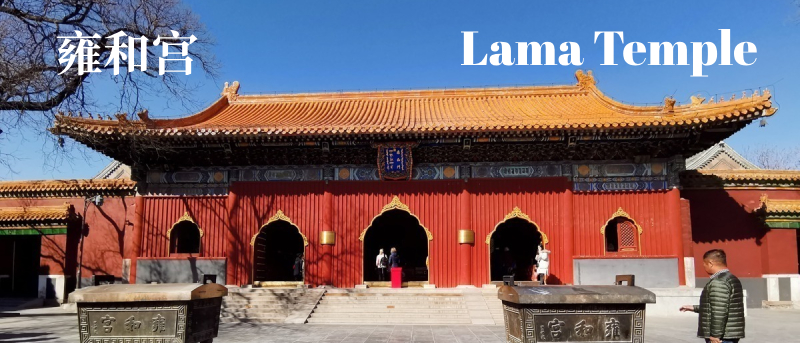
Why it’s special: This is Beijing’s most magnificent Tibetan Buddhist temple, home to a 26-meter (85-foot) Buddha carved from a single sandalwood tree—Guinness World Record holder. Originally a palace for Prince Yong (who became Emperor Yongzheng), it was converted to a lamasery in 1744, giving it unique imperial temple architecture mixed with Tibetan Buddhist elements. The three precious plaques written in Chinese, Manchu, Mongolian, and Tibetan languages demonstrate the Qing Dynasty’s multicultural governance.
🌟 For foreign visitors:
- 🙏 The “efficacy” explained: Yes, locals believe prayers here are “insanely effective,” but it’s not magic—it’s about focused intention in a sacred space. The temple’s reputation comes from its imperial lineage; emperors prayed here, so commoners believe their prayers carry extra weight
- How to participate respectfully:
- Buy incense at the gate (¥10-20 / $1.40-2.80 USD)
- Light it from communal flames, don’t blow it out—wave it
- Pray at each hall’s incense burner, not inside temples
- For career blessings: Hall of Heavenly Kings. For health: Hall of Harmony and Peace (where the giant Buddha resides)
- 📵 Photography is allowed in courtyards only—never inside halls with Buddha statues. This is strictly enforced
- 🗣️ English signage: Excellent multilingual explanations throughout. Pick up a free English guide map at the ticket office. QR codes link to audio guides in multiple languages
- ⏰ Timing: Arrive 9-10 AM to avoid tour buses. The morning chanting (around 10 AM) is hauntingly beautiful. Monks in saffron robes create a stunning visual against the red walls
- 💡 Pro tip: The “lucky charms” shop near the exit sells blessed amulets—authentic souvenirs. Prices range ¥50-200 (approx. $7-28 USD). The sandalwood bracelets are said to bring peace
- 👕 Dress code: Shoulders and knees covered (enforced at entrance). Bring a scarf
- ♿ Accessibility: Main courtyards are wheelchair accessible via ramps, but steep stairs to upper halls are not
4️⃣ Confucius Temple & Imperial Academy (孔庙 Kǒngmiào & 国子监 Guózǐjiàn)
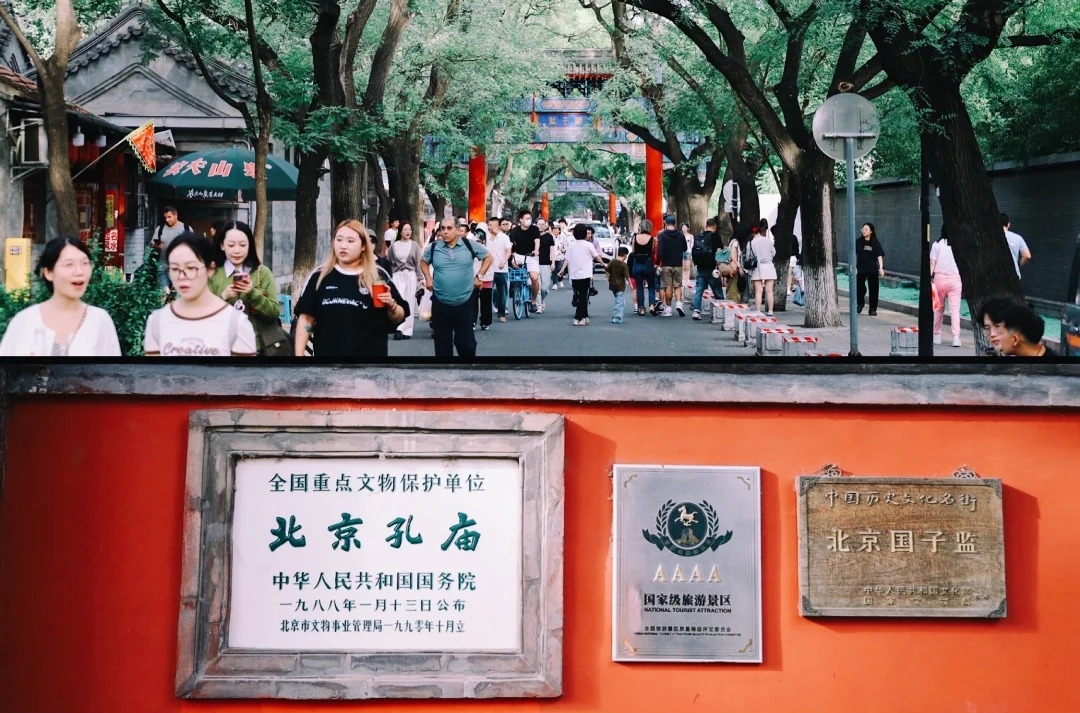
Why it’s special: This was ancient China’s Harvard-Yale-Princeton combined—the highest educational institution for 700 years. It’s where scholars prayed to Confucius before imperial exams. Built in 1306, it’s China’s last surviving imperial academy. The 189 stone tablets are essentially the 18th-century “printed books” containing the 13 Confucian classics—imagine the Library of Congress carved in stone. Over 630,000 characters were hand-copied by scholar Jiang Heng over 11 years, then carved across 4 years.
🌟 For foreign visitors:
- 🎓 Cultural bridge: This site explains China’s obsession with education and exams. The free English brochures detail the brutal 3-day exam process where scholars lived in tiny cells with no contact. It’s a fascinating glimpse into meritocracy’s origins
- 📸 Photo magic: Chengxian Street (成贤街 Chéngxián Jiē) is Beijing’s only remaining imperial archway avenue. The dappled light on red walls at 2-4 PM creates natural Instagram filters. The ancient scholar trees (some 400 years old) frame perfect shots. The glazed archway inside is the only one in Beijing dedicated to education
- 🎫 Combo ticket: ¥30 (approx. $4.20 USD) covers both sites—excellent value. Keep your ticket; you need it for both entrances. Tickets include a simple map
- 🧘 Quiet sanctuary: After Yonghegong’s crowds, this is contemplative and peaceful. The cypress grove smells incredible and lowers the temperature by several degrees
- ♿ Accessibility: Flat, wheelchair-friendly paths throughout—a rarity in historic Beijing. The main halls have ramps
- 🏛️ Historical context: The stone tablets are called “Qianlong’s Stone Classics.” Touching them connects you to 1737. The main hall, Biyong Hall, is where the emperor personally lectured
- 📍 Best photo spot: The circular moat around Biyong Hall represents “heaven is round, earth is square” philosophy. This shot is unique to Beijing
5️⃣ Beiluoguxiang (北锣鼓巷 Běi Luógǔ Xiàng)
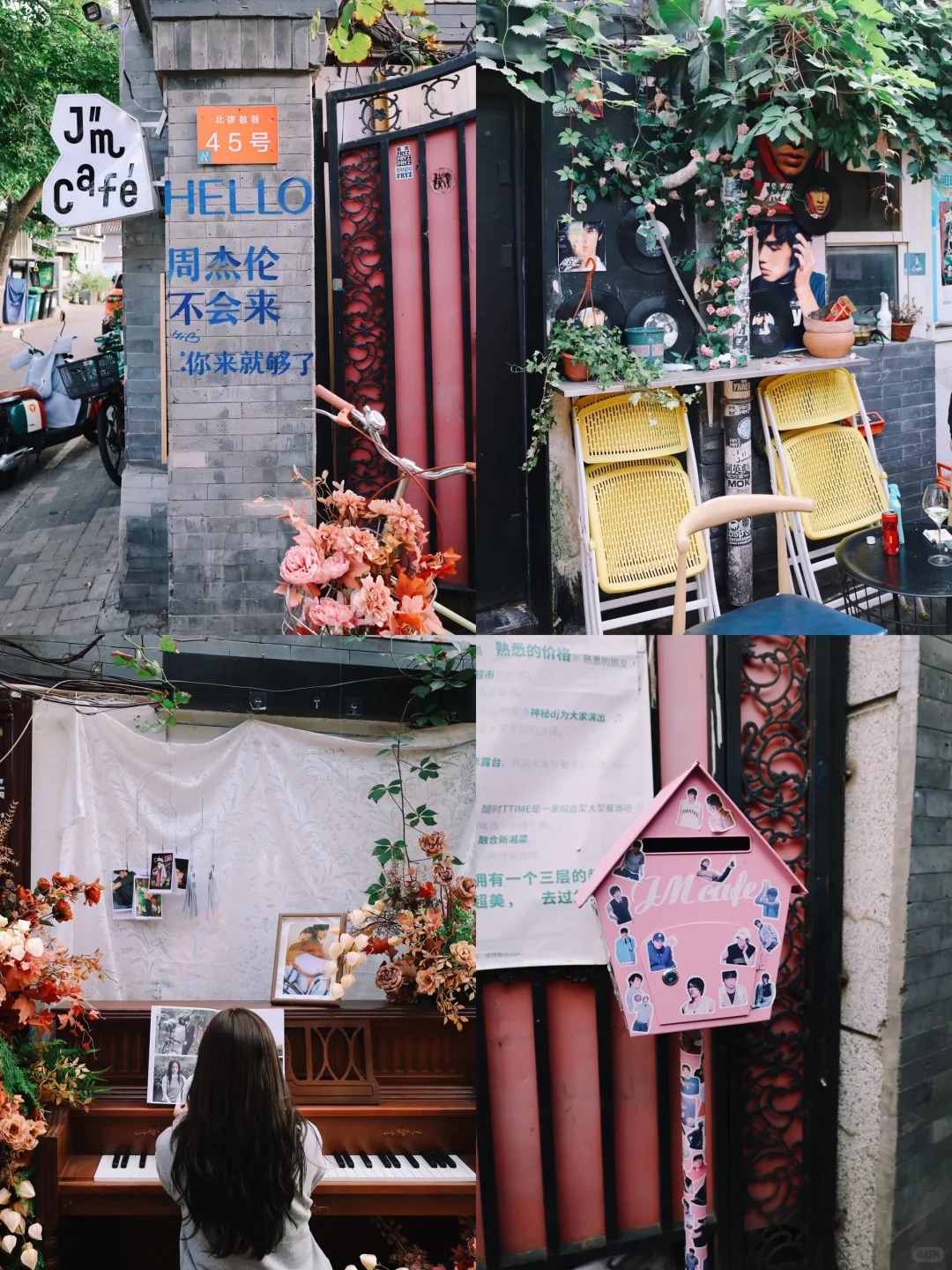
Why it’s special: Literally “North Gong and Drum Lane,” this is Nanluoguxiang’s unspoiled twin. Same 800-year-old architecture, zero tourist touts. Built during the Yuan Dynasty, this 866-meter hutong was originally home to officials and merchants. Today, it’s where the “cool kids” live—think musicians, artists, and old Beijingers who’ve refused to sell to developers. The juxtaposition of graffiti art and traditional 木门 (mùmén, wooden doors) is striking.
🌟 For foreign visitors:
- 🏘️ Authentic living: You’ll walk past actual homes with bicycles, drying laundry, and locals playing mahjong. This is “hutong life” unfiltered. It’s safe, respectful photography territory—ask permission first (“Kěyǐ pāizhào ma?”). The sense of community is palpable
- 📸 Best photo spots:
- Ru Guo Bar entrance: Vintage bicycle backdrop with traditional door studs
- V7 Coffee second-floor window: Shoot down onto the hutong life below
- Jim Café: Known for its courtyard garden and resident cat—very “Beijing cool”
- ☕ Coffee break: V7 Coffee (V7咖啡) sources Yunnan beans and the barista speaks excellent English. Perfect pit stop with WiFi and clean restrooms
- 🚫 No hard sells: Unlike tourist hutongs, shop owners won’t chase you down. Browse at leisure. The vintage clothing shop Dongliang has authentic 1980s Chinese pieces
- 🏛️ Cultural insight: Notice the stone drums at some gates—these marked the homes of high officials. The higher the drum, the higher the rank
- 🔒 Safety: Extremely safe at all hours. Local shopkeepers act as informal neighborhood watch
6️⃣ Drum Tower (鼓楼 Gǔlóu) & Bell Tower (钟楼 Zhōnglóu)
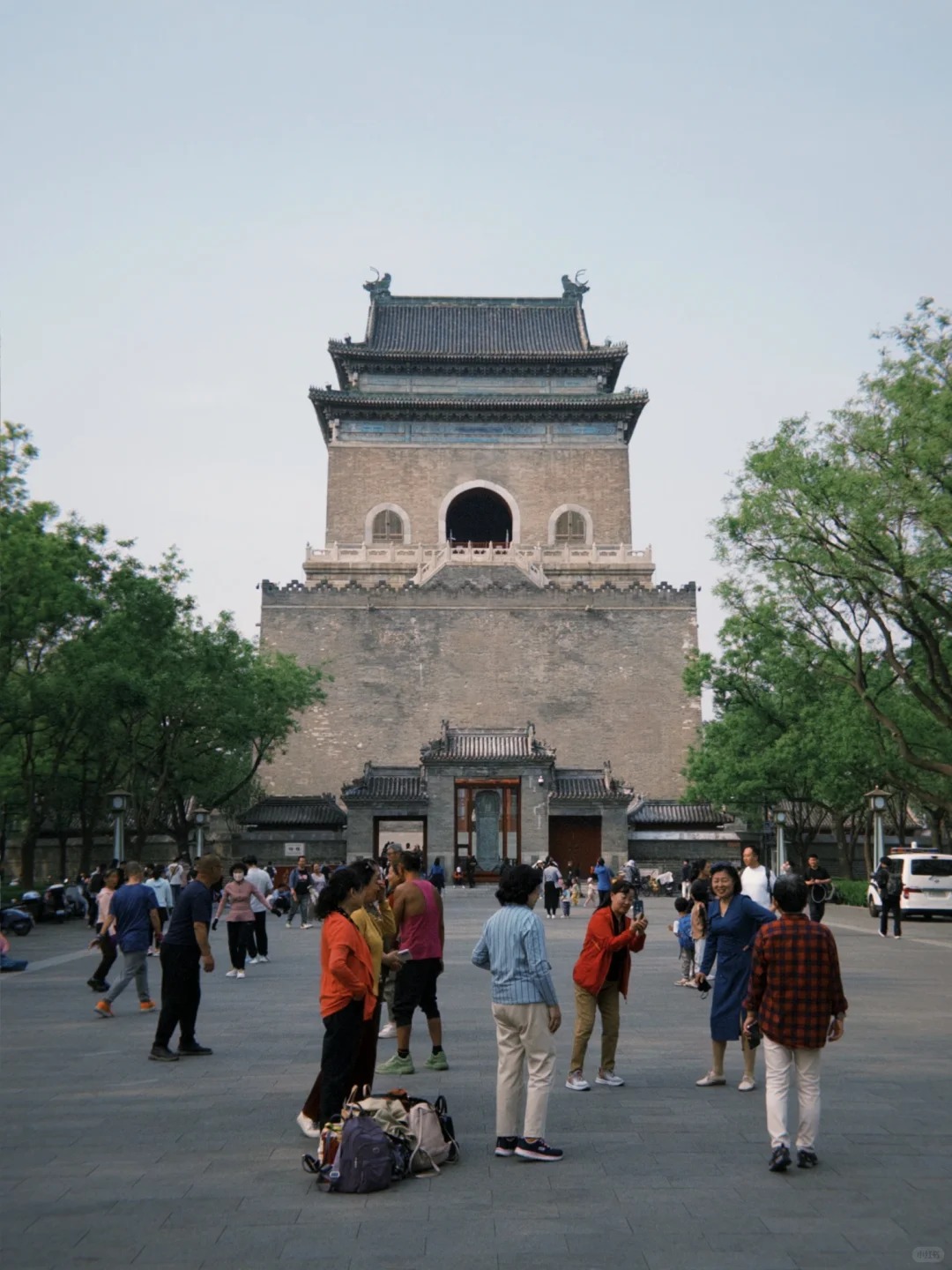
Why it’s special: These Ming Dynasty twins kept Beijing on time for 600 years. The Drum Tower’s drum performances (every hour) are thunderous and thrilling. Originally built in 1272 (Yuan Dynasty) and rebuilt in 1420 (Ming), they sit on Beijing’s central north-south axis. The 24 drums in the Drum Tower were beaten to mark the hours, while the Bell Tower’s massive 63-ton bronze bell (the heaviest in China) rang at dawn and dusk. The bell’s sound could carry 20 kilometers.
🌟 For foreign visitors:
- 🎵 The song connection: Zhao Lei’s “Gulou” is China’s equivalent of “Sweet Home Chicago”—a folk anthem about growing up here. Listen on Spotify beforehand; it’ll give you chills when you see the tower. The lyrics mention the exact streets you’re walking
- 📸 Photo strategy:
- Drum Tower: Shoot from the east side at dusk—lit against the sky. The street signs “Gǔlóu Dōngdàjiē” make perfect foreground. The contrast of ancient tower and modern traffic is striking
- Bell Tower: More residential vibe. Capture locals playing badminton in its shadow—this is your “authentic Beijing” money shot. The tower’s grey bricks photograph beautifully in morning light
- ⚠️ Climbing warning: The Drum Tower’s stairs are steep—70-degree angle, 69 steps, no elevator. If you have mobility issues, admire from ground level. The Bell Tower is slightly easier with 75 steps but equally steep
- 🎭 Performance times: Drum show at :00 hourly (last show 4:30 PM). Arrive 10 minutes early for good viewing spots. The performance uses replicas of the original drums—five minutes of thunderous rhythm
- 📜 The bell legend: The bronze bell has a famous ghost story about a mother’s sacrifice to make it ring clearly. Ask the ticket seller about “the bell legend”
- 💰 Cost: ¥30 (approx. $4.20 USD) combo ticket. Worth it for history buffs; otherwise, the exterior views are free and spectacular
- 🌃 Night view: Both towers are beautifully illuminated until 9 PM. The square between them becomes an impromptu dance party at sunset—locals doing group dances, which you’re welcome to join
7️⃣ Yandai Xiejie (烟袋斜街 Yāndài Xiéjiē)
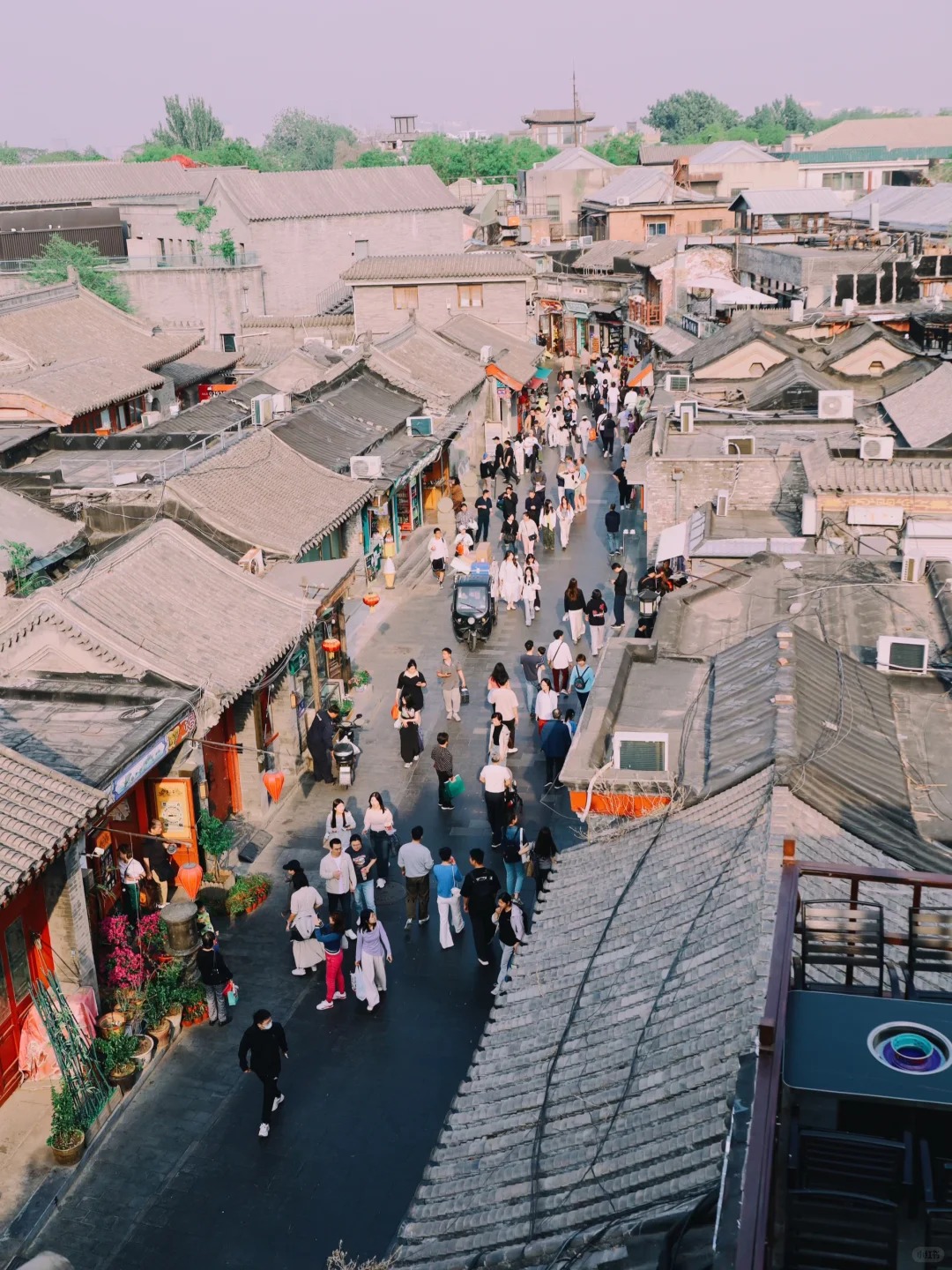
Why it’s special: This 300-meter diagonal alley is your snack-and-shop interlude before Shichahai. “Tobacco Pipe Street” once served Qing Dynasty smokers; now it’s retro-chic central. Built in the Qing Dynasty to serve the nearby Prince Gong’s Palace, the street’s shape resembles an old tobacco pipe, hence the name. It was the royal family’s shopping street, which explains the high-quality craftsmanship that persists today.
🌟 For foreign visitors:
- 🍢 Food safety tips:
- Stick to cooked items: Candied hawthorn (冰糖葫芦 bīngtáng húlu) is safe and iconic—crispy sugar shell over tart hawthorn berries
- Avoid: Raw cold noodles from street carts unless you see high turnover
- Reputable spot: Tangfang (糖房) has a 3rd-floor terrace bar with hygienic kitchen and panoramic views. Their cocktails (¥50-80 / $7-11 USD) are pricey but the view is worth it
- 🏙️ The hidden gem: Tangfang’s rooftop (entry through the coffee shop) offers the best overview of the hutong-Shichahai-Drum Tower axis. Go at sunset for “golden hour” shots. No purchase required, but buy a coffee (¥30 / $4.20 USD) as courtesy. The terrace faces west, perfect for sunset
- 💰 Bargaining: Souvenir shops expect 20-30% negotiation. Start at half the price and smile. If they don’t budge, walk away—they’ll often call you back. Items like vintage Mao badges and old propaganda posters are popular but verify authenticity
- 🏘️ Architectural detail: Notice the slanted street—this was designed for drainage and creates forced perspective photos
- 💳 Payment: Cash is king here. Most small shops don’t take cards
- ⏰ Best time: 3-5 PM when the light hits the traditional shop signs perfectly
8️⃣ Shichahai (什刹海 Shíchàhǎi) & Houhai (后海 Hòuhǎi)
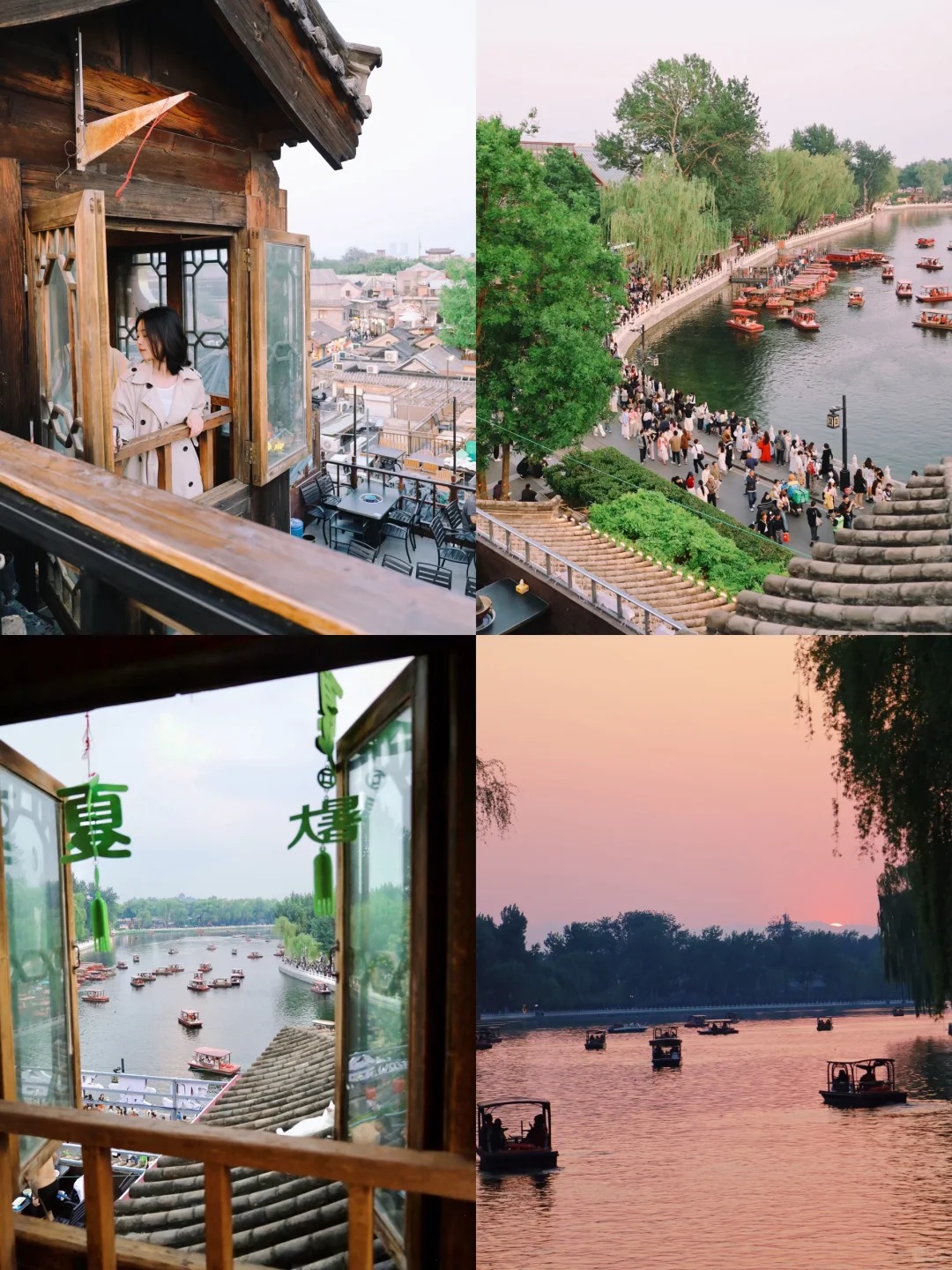
Why it’s special: This is Beijing’s Venice—three interconnected lakes surrounded by lit-up bars, traditional boats, and the best sunset in the city. Shichahai means “Ten Temple Sea,” named for the ten temples that once surrounded it. During the Yuan Dynasty, this was the northern terminus of the Grand Canal. The lakes were dug to store water for the canal, creating this unique urban water system. Today, the former imperial ice storage houses are now chic bars, and the lakes host Beijing’s most vibrant nightlife.
🌟 For foreign visitors:
- 🌅 The sunset ritual: Arrive 5:30-6 PM (season-dependent). The “orange sea” sunset reflects off the water and traditional courtyard roofs—it’s the most photographed view in Beijing for a reason. Position yourself on the southwest bank near Hutong Pizza for unobstructed views. The reflection of the Bell Tower in the water is spectacular
- 🎵 Live music: Houhai’s bar street is Beijing’s folk music heartland. Bars like Modernista and Oasis have English-speaking staff and no cover charge. Beer starts ¥30 ($4.20 USD). Negotiate: “Duōshao qián?” then offer 70%. They expect it
- 📸 The “blue hour” shot: At twilight, the lake turns cobalt blue, temples silhouette black, and bar lights twinkle. This is your money shot—use a tripod if you have one. The temperature drops noticeably by the water, bring a light jacket
- ⛵ Boat rides: Traditional paddle boats (¥80 / $11 USD per hour) are fun but skip the larger “tourist boats” (¥150 / $21 USD). The self-paddle ones let you explore quiet corners near the former imperial gardens
- 🛡️ Safety: Very safe, but watch for pickpockets in crowded bar areas—standard big-city precaution. Police patrol constantly; they’re helpful if you need directions. The lakes have guardrails but keep an eye on children
- 🍽️ Dining: Hutong Pizza (胡同披萨) has English menus and lake views. Dali Courtyard serves Yunnan cuisine in a beautiful setting. Reservations recommended. For budget options, Kuang Diao (框调) has excellent noodles for ¥25 ($3.50 USD)
- 🌃 Nightlife alternatives: If bar street is too loud, walk to Qianhai (front lake) where locals fish and practice tai chi. The Fire God Temple is a quiet spot to end the evening
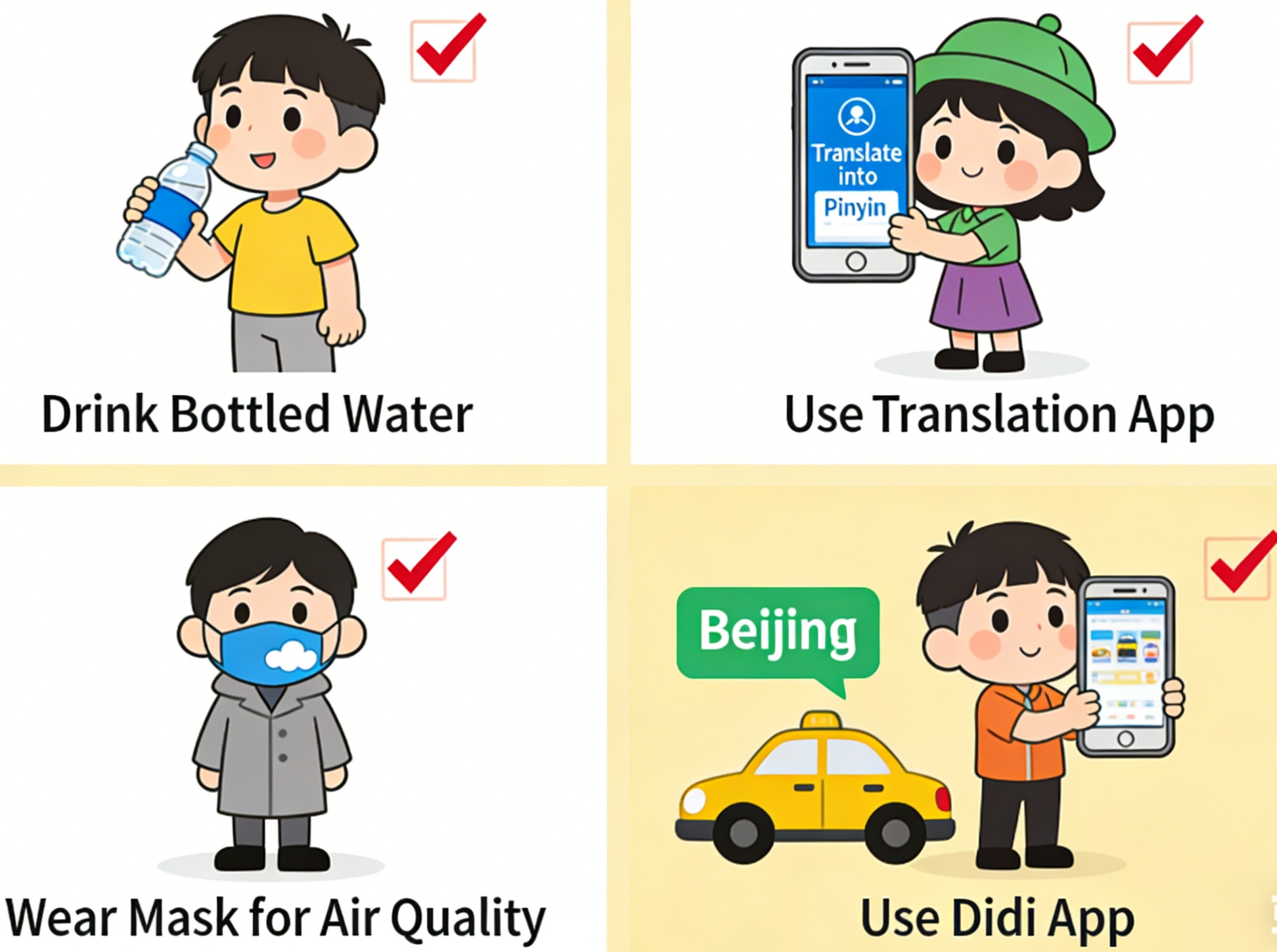
- 🚇 Ending the night: Shichahai Station (Line 8) is a 10-minute walk. Last trains run ~11 PM. If staying out later, Didi (China’s Uber) works with foreign credit cards—download the English version. The area is safe to walk at night, and taxis are plentiful
🎒 Essential Foreign Traveler Tips for This Route
⏰ Start Time:
9 AM at Ditan Park. Early enough to beat crowds, late enough that cafés are open. Temples open at 9 AM, so you time it perfectly.
🎒 What to Bring:
- 🔋 Portable phone charger (you’ll take 200+ photos)
- 💧 Reusable water bottle (cheap refills at any convenience store)
- 🧻 Tissues/sanitizer (public restrooms rarely have paper)
- 💵 Cash: ¥200 ($28) in small bills for temples, small snacks, emergencies
- 🔒 VPN downloaded before China arrival (Google Maps works poorly offline)
- 🧥 Light jacket (even summer evenings can be cool by the lakes)
💳 Payment Revolution (2025 Update):
Foreign Visa/Mastercard now link directly to Alipay and WeChat Pay via their international versions. Download Alipay International before arrival—most shops on this route accept it. Cash is backup for street food. Some ATMs in the hutongs accept foreign cards; look for Bank of China or ICBC.
🗣️ Language Survival:
- “Duōshao qián?” (多少钱, How much?) - Essential
- “Wèishēngjiān zài nǎr?” (卫生间在哪儿, Where’s the toilet?) - Essential
- “Kěyǐ pāizhào ma?” (可以拍照吗, Can I take a photo?) - Shows respect
- “Xièxie” (谢谢, Thank you) - Use constantly
- Translation apps: Pleco for offline translation; WeChat’s translate function works in real-time. Google Translate works offline if downloaded beforehand
🛡️ Safety & Comfort:
- This route is in Dongcheng District, one of Beijing’s safest areas. Solo female travelers report feeling secure even at night
- Aggressive vendors are rare; a firm “Bù yào, xièxie” (不要,谢谢) works. No one will follow you
- Air quality: Download AirVisual app. If AQI >150, consider a mask (available at any pharmacy for ¥5-10 / $0.70-1.40 USD)
- 🚻 Restrooms: Acceptable at all paid attractions; basic but clean in hutongs. The McDonald’s near Gulou Dongdajie is a reliable backup
- 💧 Water: Tap water is not drinkable. Bottled water is available everywhere for ¥2-3 ($0.30-0.40 USD)
- ⚠️ Scams: Virtually non-existent on this route. Only risk is overpriced taxis—use Didi instead
💰 Budget Estimate
| Category | Cost (RMB) | Cost (USD) |
|---|---|---|
| 🚇 Subways | ¥20 | $2.80 |
| 🏛️ Attractions | ¥62 | $8.70 |
| 🍜 Food & drinks | ¥150-250 | $21-35 |
| 🛍️ Souvenirs | ¥50-100 | $7-14 |
| 💵 TOTAL | ~¥300 | ~$45 |
Exceptional value for a world-class cultural experience!
🏆 Why This Route Wins for International Visitors
| ✅ No tourist trap fatigue – Real neighborhoods, not performance culture | ✅ English-friendly – Enough signage and speakers to navigate confidently |
| ✅ Compact & efficient – Maximum sights, minimum transit stress. All walkable | ✅ Photo-dense – Every turn is a potential National Geographic shot |
| ✅ Cultural depth – From Confucian philosophy to living Buddhist practice | ✅ Safe & manageable – Flat terrain, excellent public transit, safe streets |
| ✅ Foodie paradise – From street snacks to craft cocktails, all budgets covered | ✅ Timeline flexibility – Can be shortened to 4 hours or extended to 8 hours easily |
If you’re visiting Beijing, this isn’t just a walk—it’s your gateway into the city’s soul.
Take your time, chat with locals (they love practicing English), and let the layers of history unfold. This is the Beijing that will stay with you long after you’ve posted the photos.
㊗️ Wishing you an unforgettable adventure!
📱 For more Beijing insights, follow our WeChat: BeijingUrbanExplorer
Last updated: December 2025
Feedback? We update this guide monthly based on traveler experiences.